
URBAN RESILIENCE TOOLSUrban Resilience Tools for the people of Chiang Mai
Dust every dry season, floods every rainy season. While we wait for the problems to be fixed at the source, we're making things to help city folks get by.
Fix it at the source,

I know these problems have to be fixed at the source. The dust comes from burning, so ending it for real means less burning, other kinds of farming and crop rotation. Flash floods and flooding mean replanting forests and bringing watersheds back. And on top of all that, the climate crisis makes everything hit harder every year.
That's too big for a municipality to fix alone, but I'll push for it as hard as I can, wherever I get the chance.
But while we wait for the source to be fixed, those of us who still have to eat, sleep, get the kids to school and open our shops every day need to get by first.
Chiang Mai, at the end of the line, has got to... survive.
So Tong Rod (ต้องรอด), Urban Resilience Tools is a project that designs tools for the natural disasters people in Chiang Mai keep facing. We make them ourselves at Playground, with stuff you can buy in town, at prices locals can afford, and you can put them together yourself.
Problems this city faces every single year
PM2.5 dust
Dust inside your home can climb to dangerous levels even with every door and window shut. Hit hardest: young kids, older people, and anyone who can't afford an air purifier.
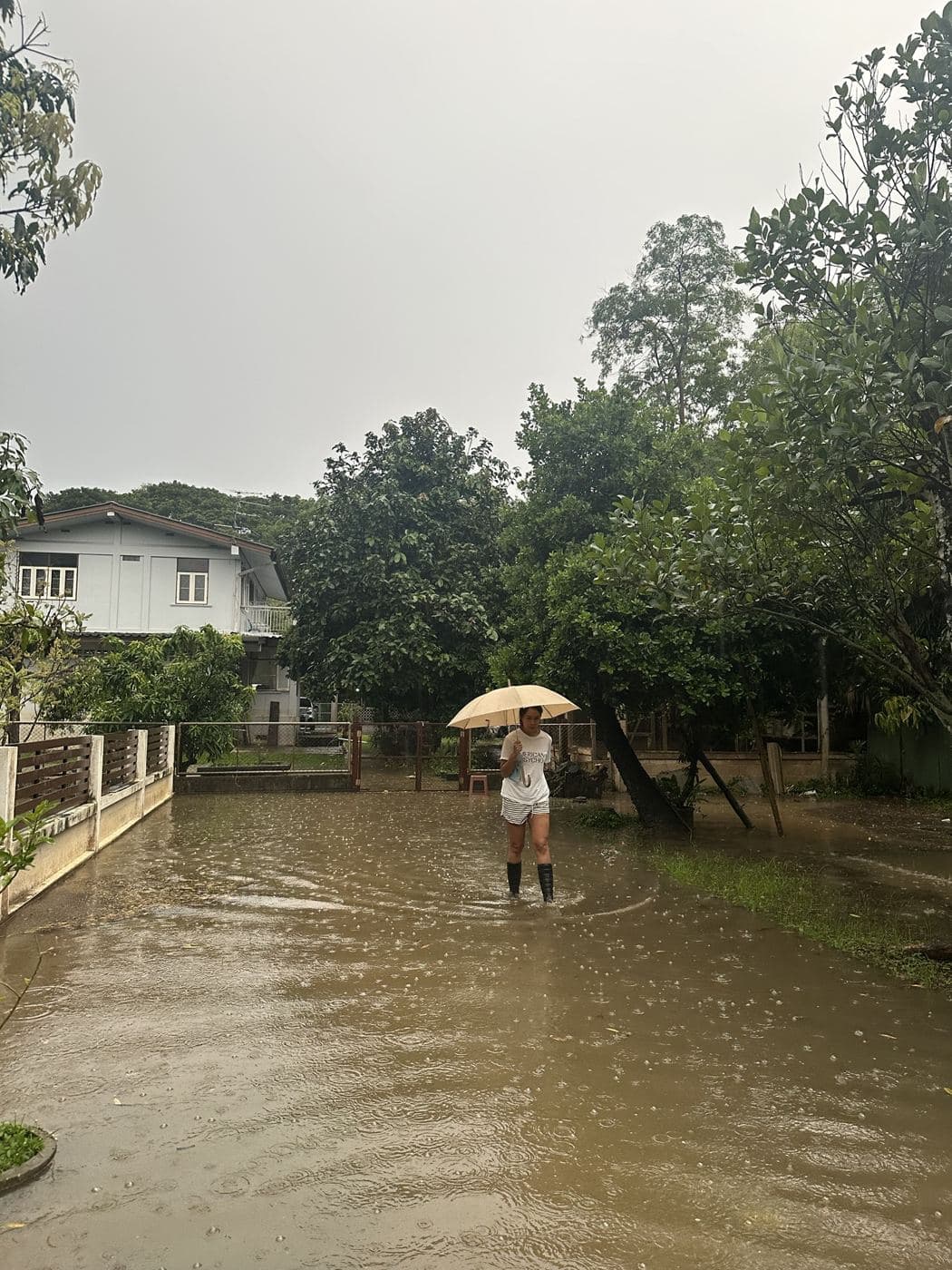
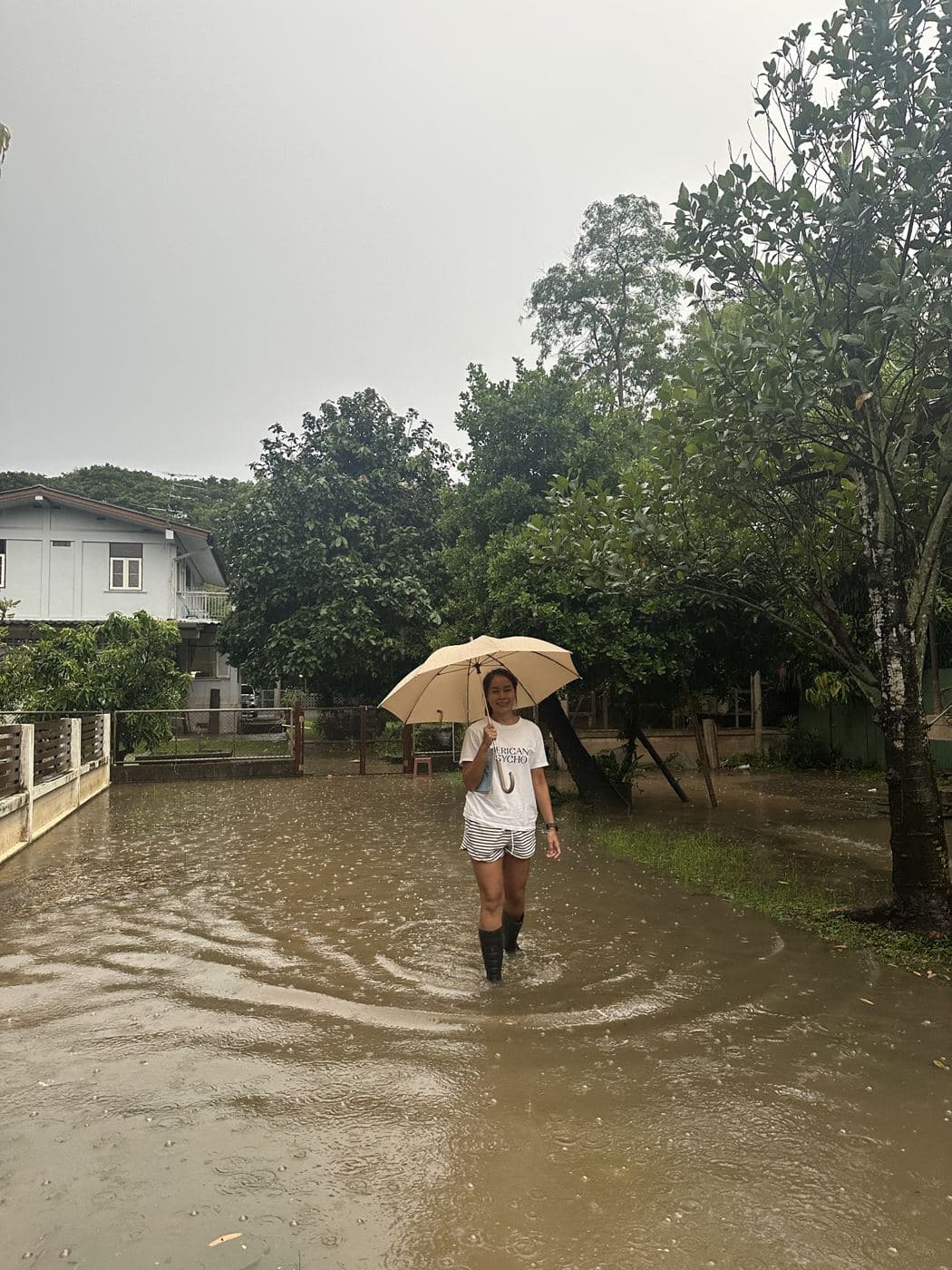
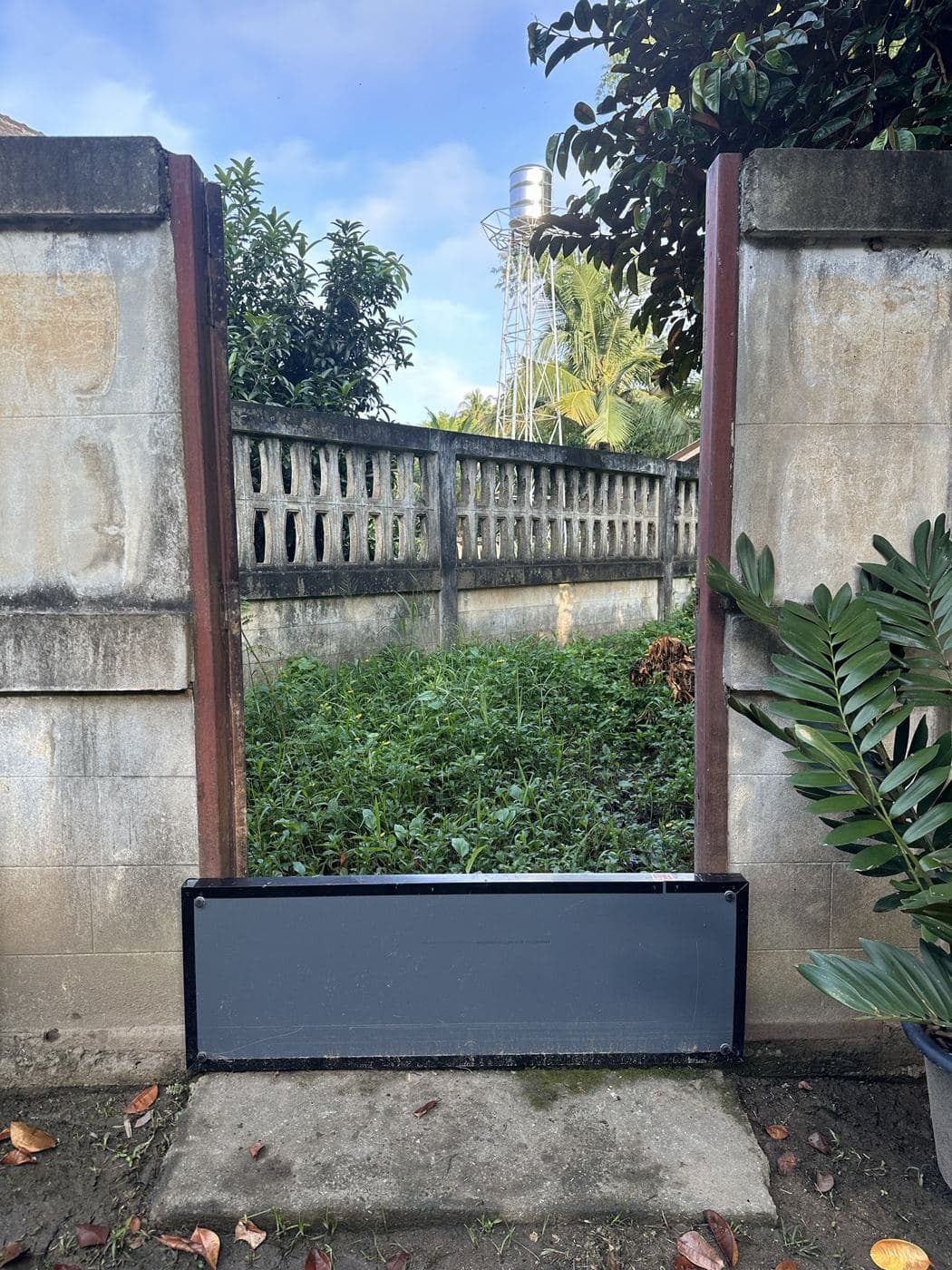
Floods and standing water
Two or three hours of heavy rain and the water's already pooling. No need to wait for the Ping River to overflow. Lots of sois in the municipality flood in the same spots every year, and locals know better than anyone which drains are blocked.
What we've made so far
Every one started with a problem I had at home, then grew to help other people.
Community clean air room POSITIVE PRESSURE ROOM
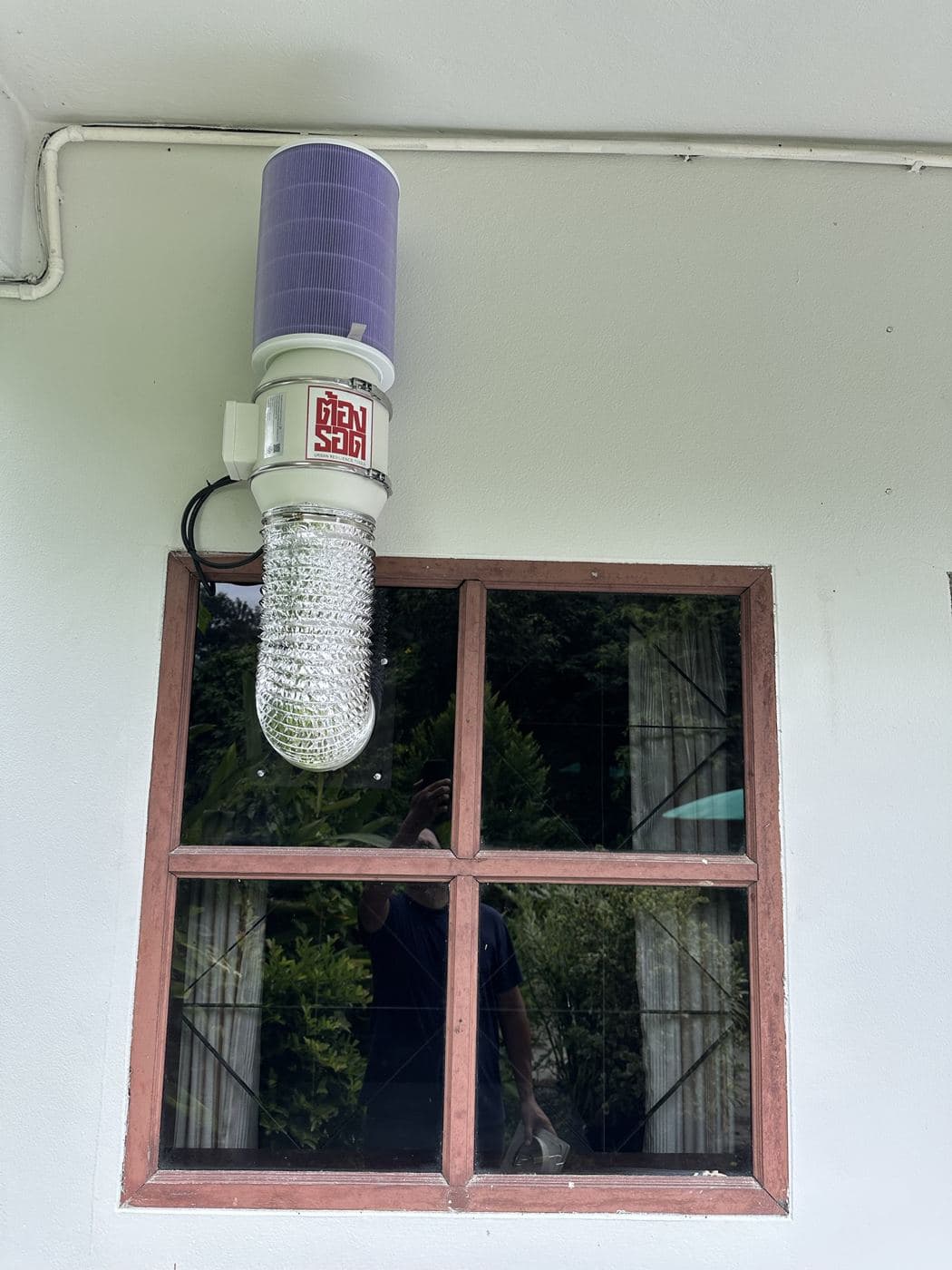

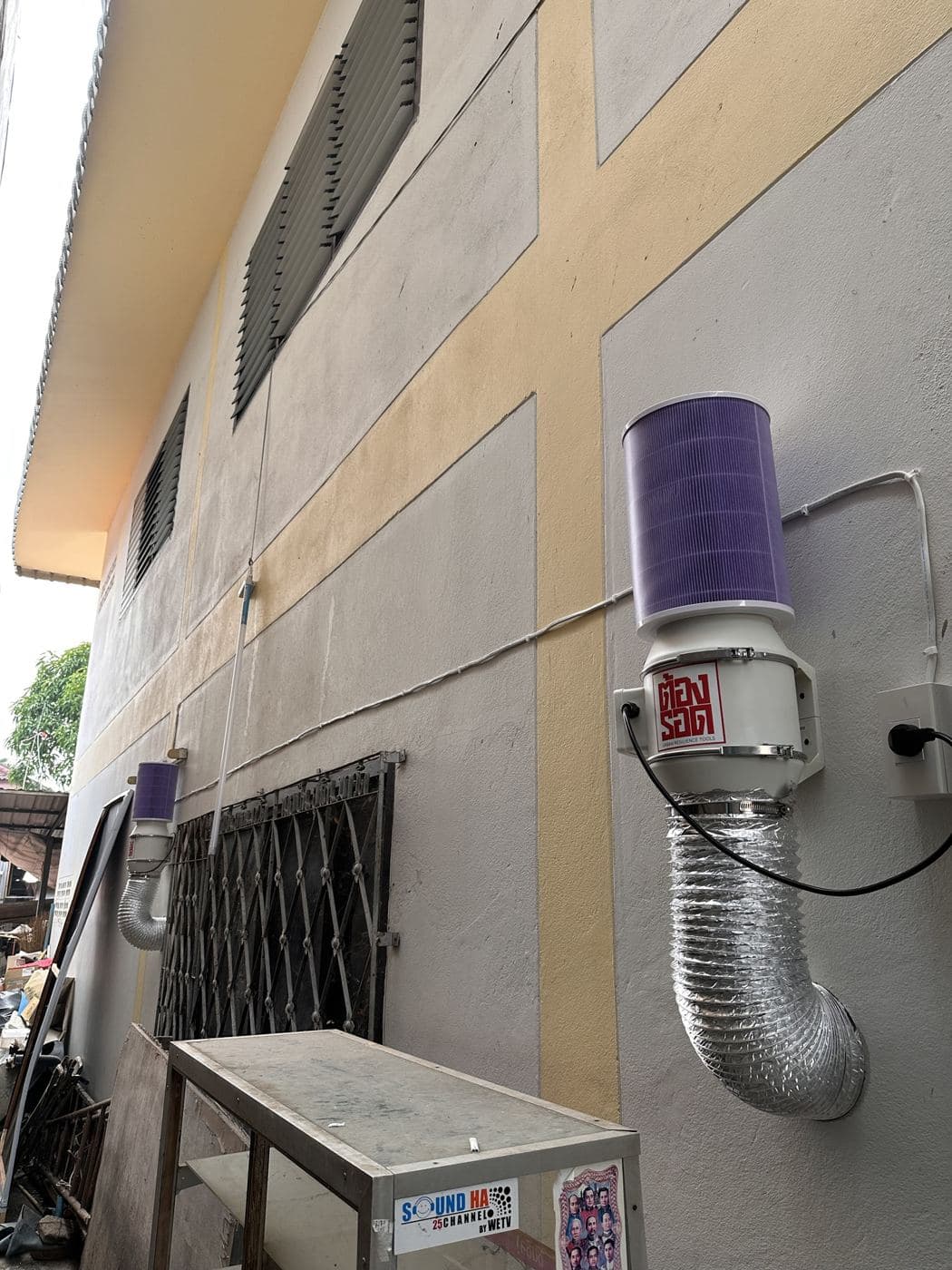
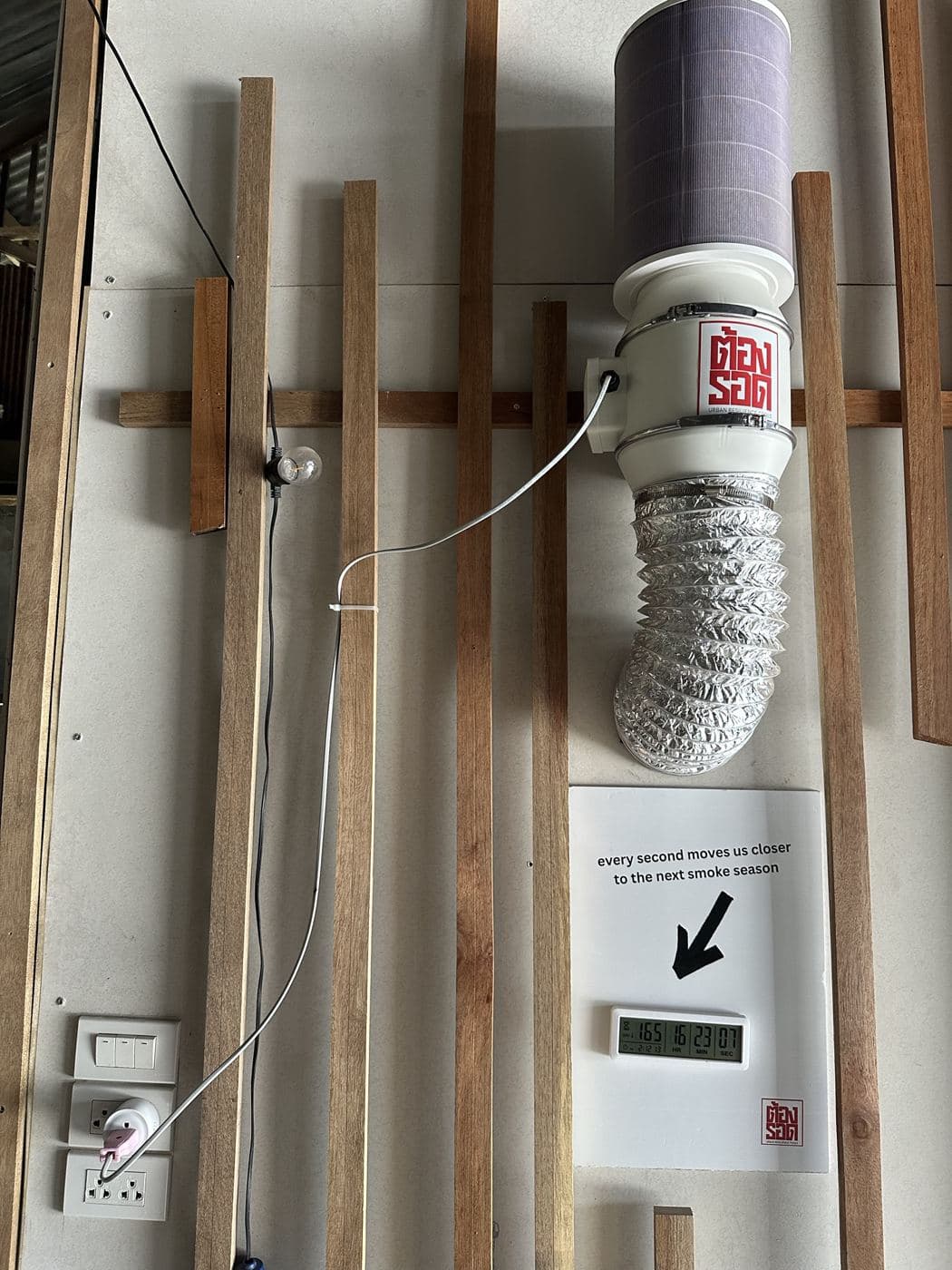
It's science backed by research. Pump clean, HEPA-filtered air into a sealed room until the pressure inside is higher than outside, and the dust can't get in. Big room or small, it works the same way.
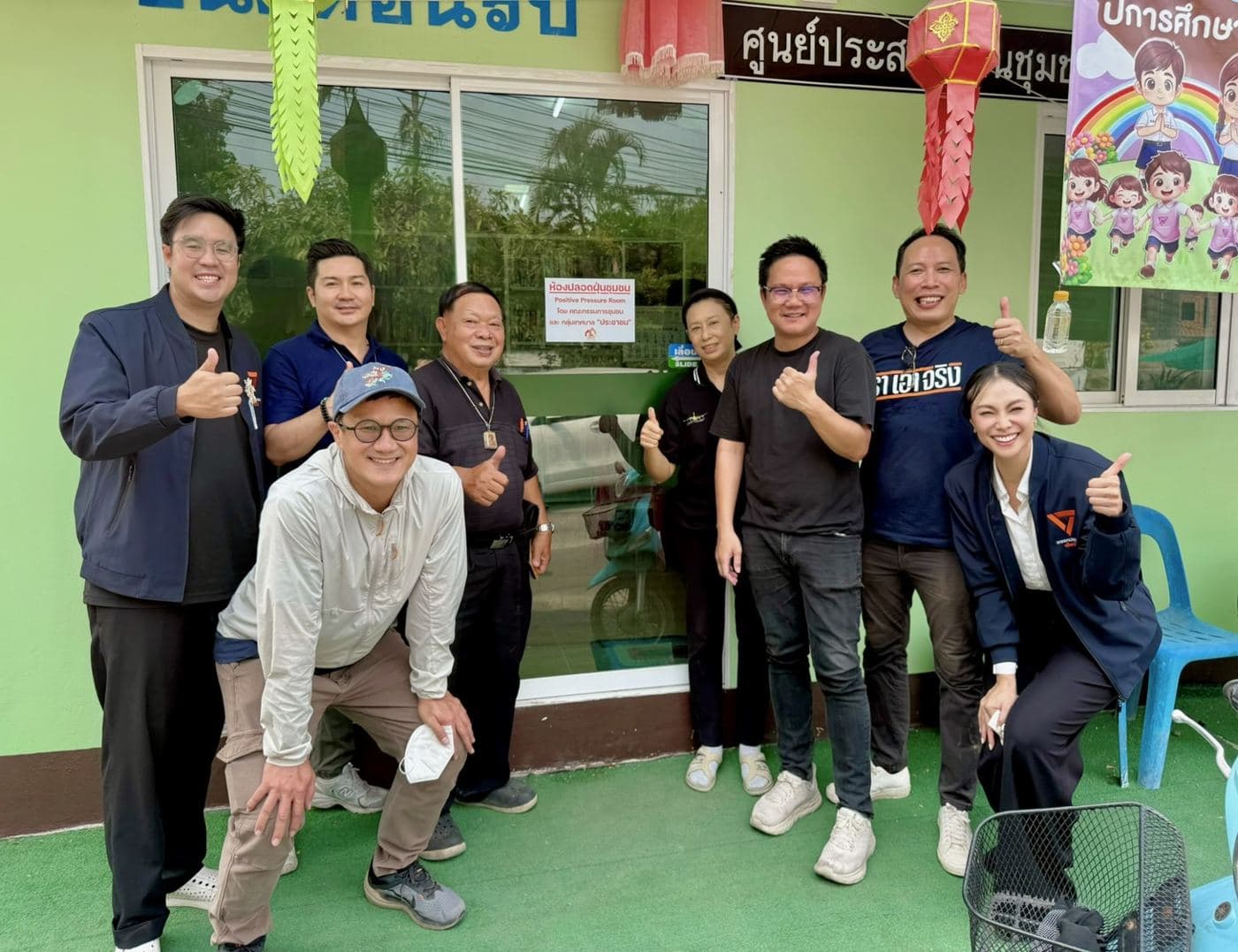
We started by testing at Playground and measured it for real: the air inside was several times cleaner than outside. Then we installed them in real homes, schools, temple halls, community offices and more, so each one becomes a community clean air room where people with no sealed room at home can shelter from the dust close by. Last dust season we set up almost 20 community clean air rooms across Chiang Mai.
Up and running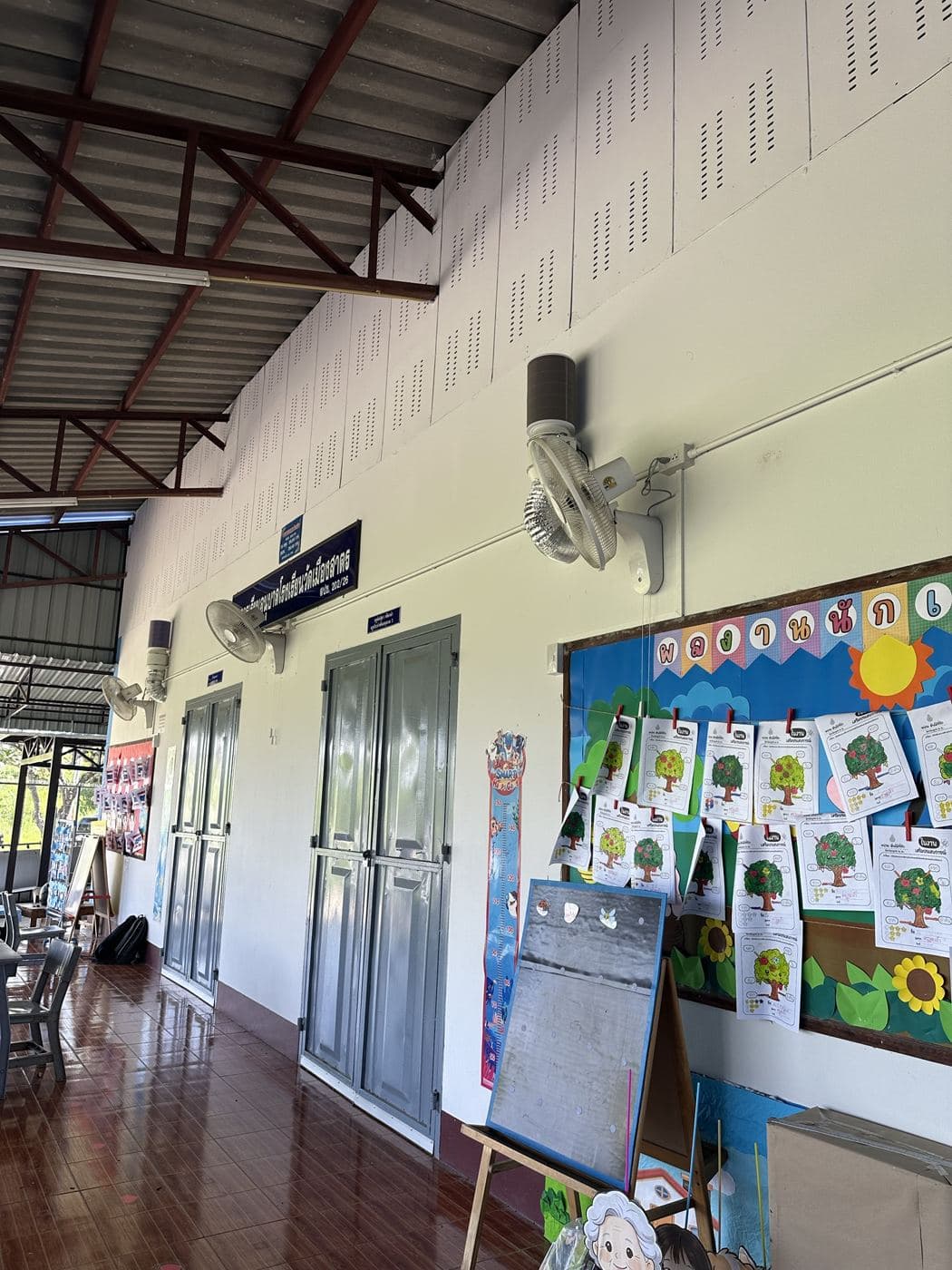
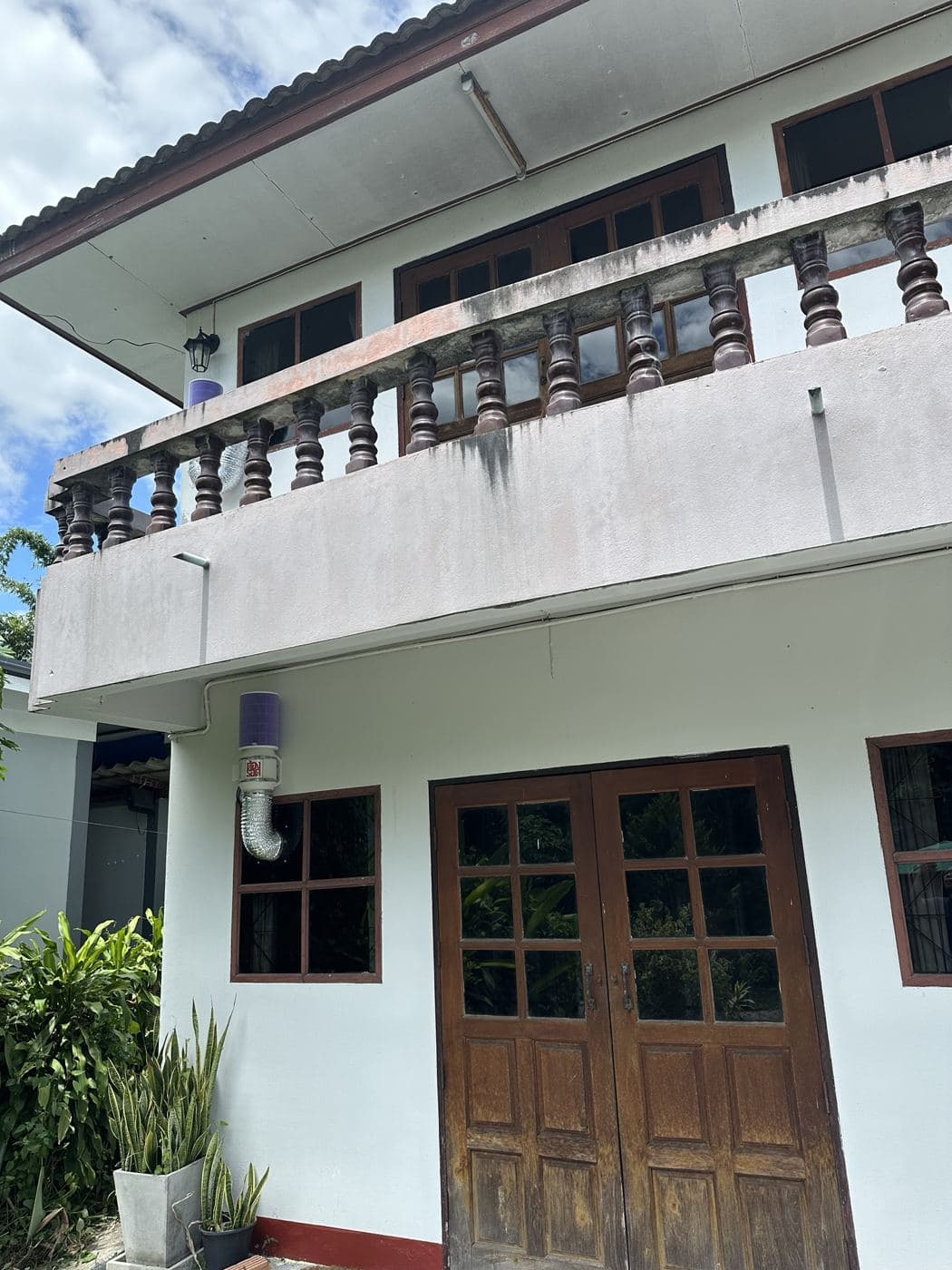
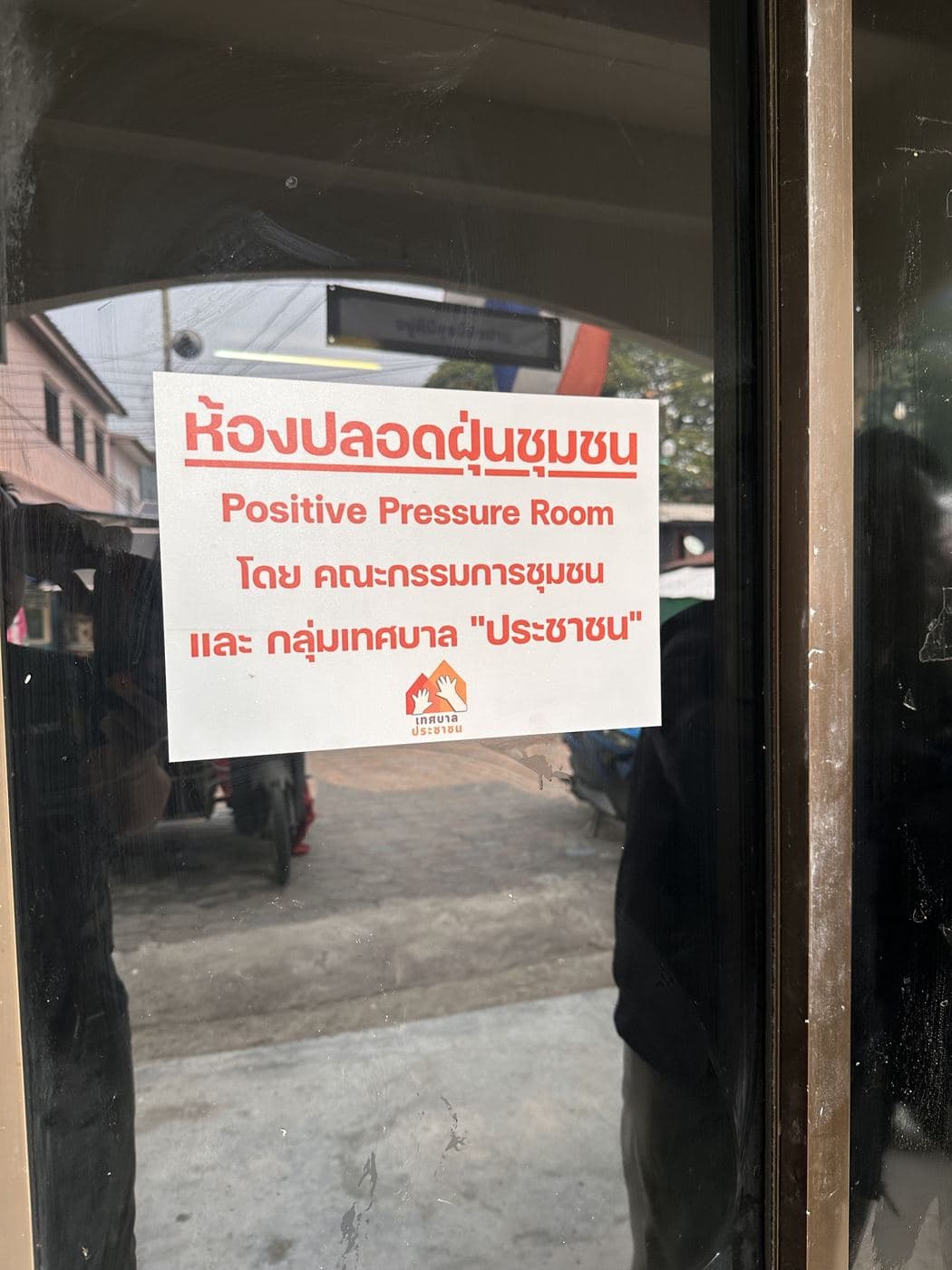
Mung Su Fun (Clean Air Net) DIY, easy to build, really works
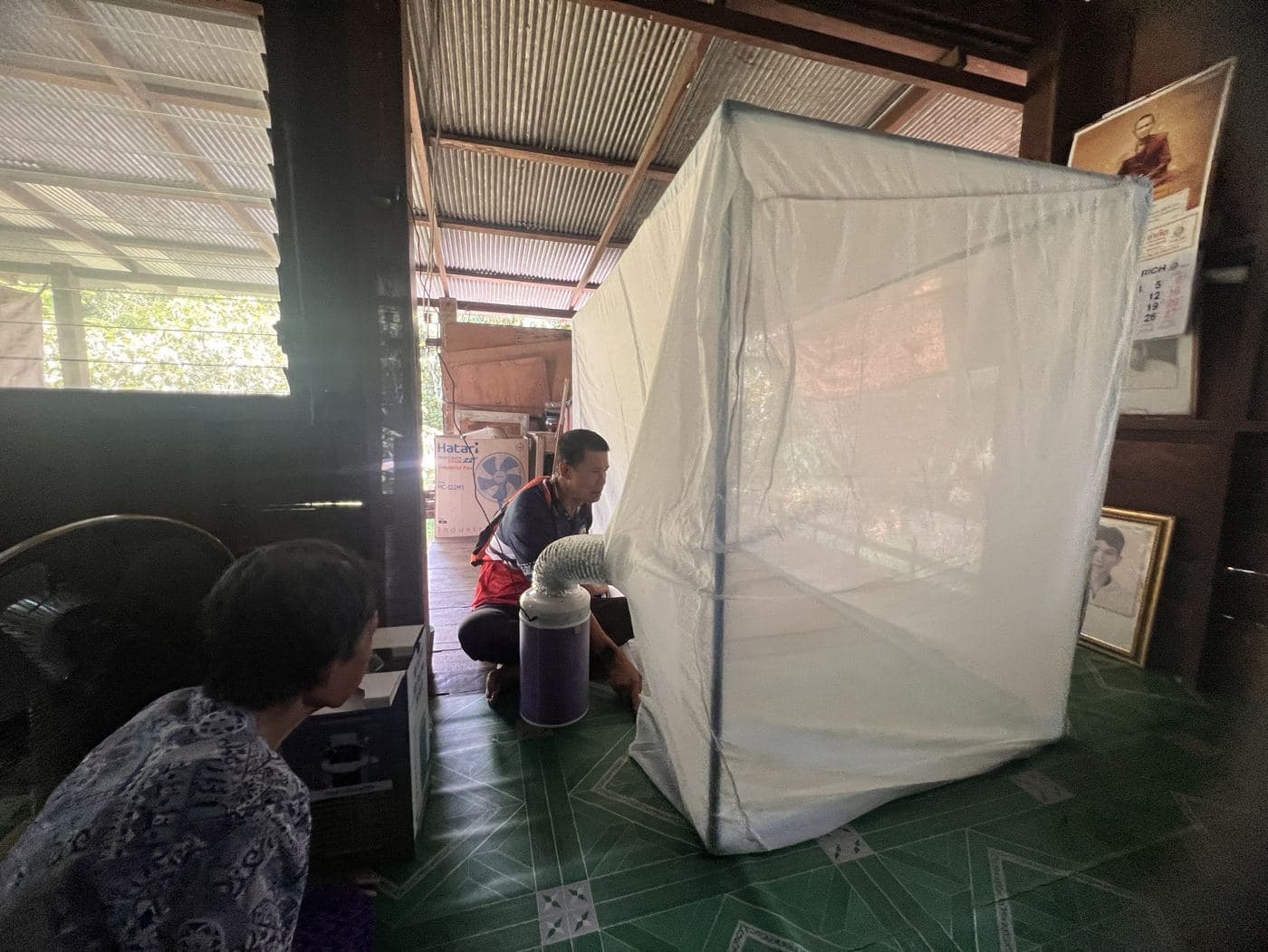
Not everyone has a sealed room to live in. Lots of people sleep out in the open, under the house or on the porch, with no bedroom at all. We studied research from Chiang Mai University's Faculty of Engineering, then tested until we got it: you already have a mosquito net at home. Just add a blower fan, a HEPA filter and a duct running into the net. At night, when the dust is worst, whoever's inside gets to breathe filtered air. It's not as good as a clean air room (positive pressure room), but it's a whole lot better than nothing, and better than running an air purifier out in the open.
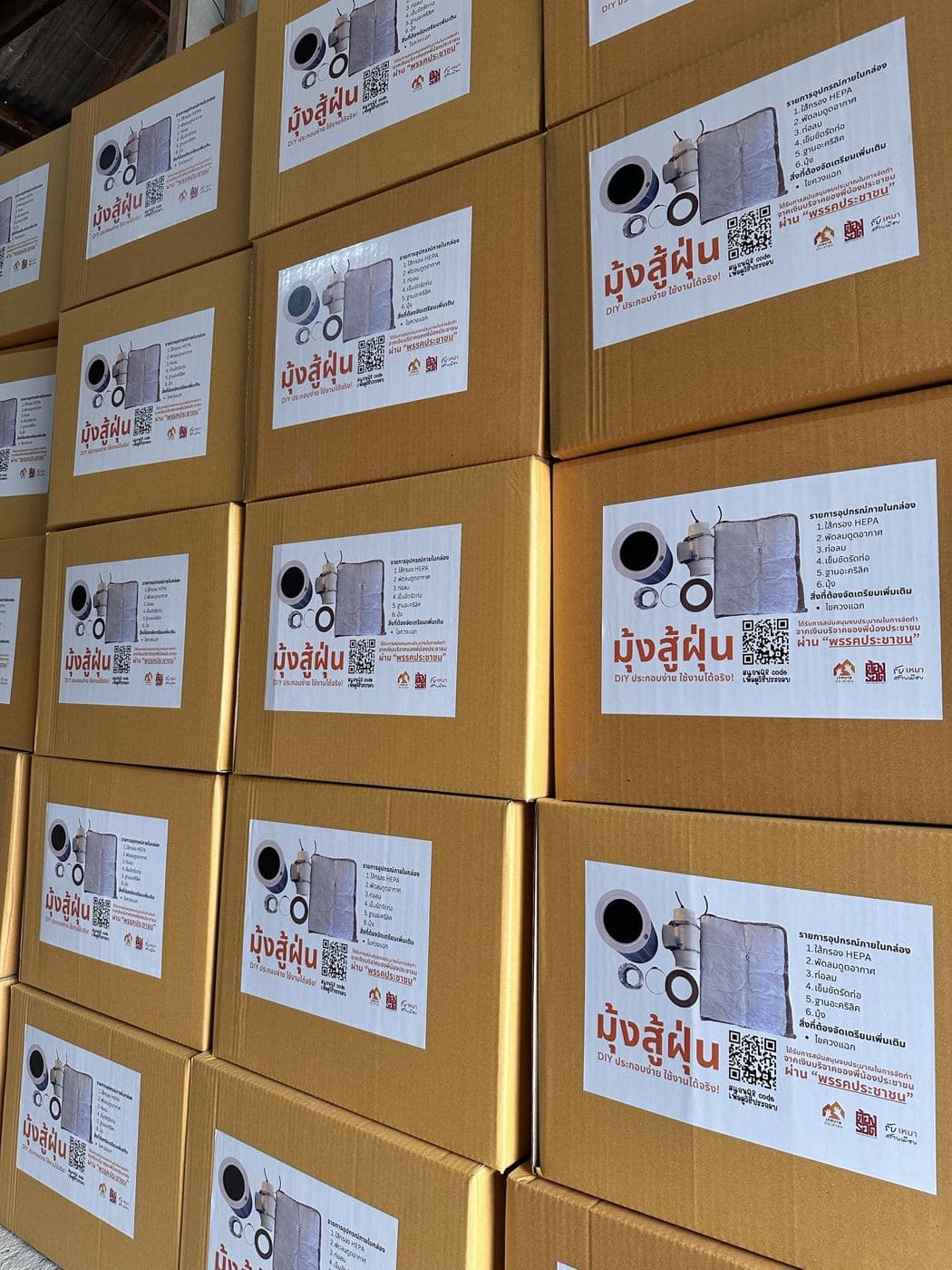
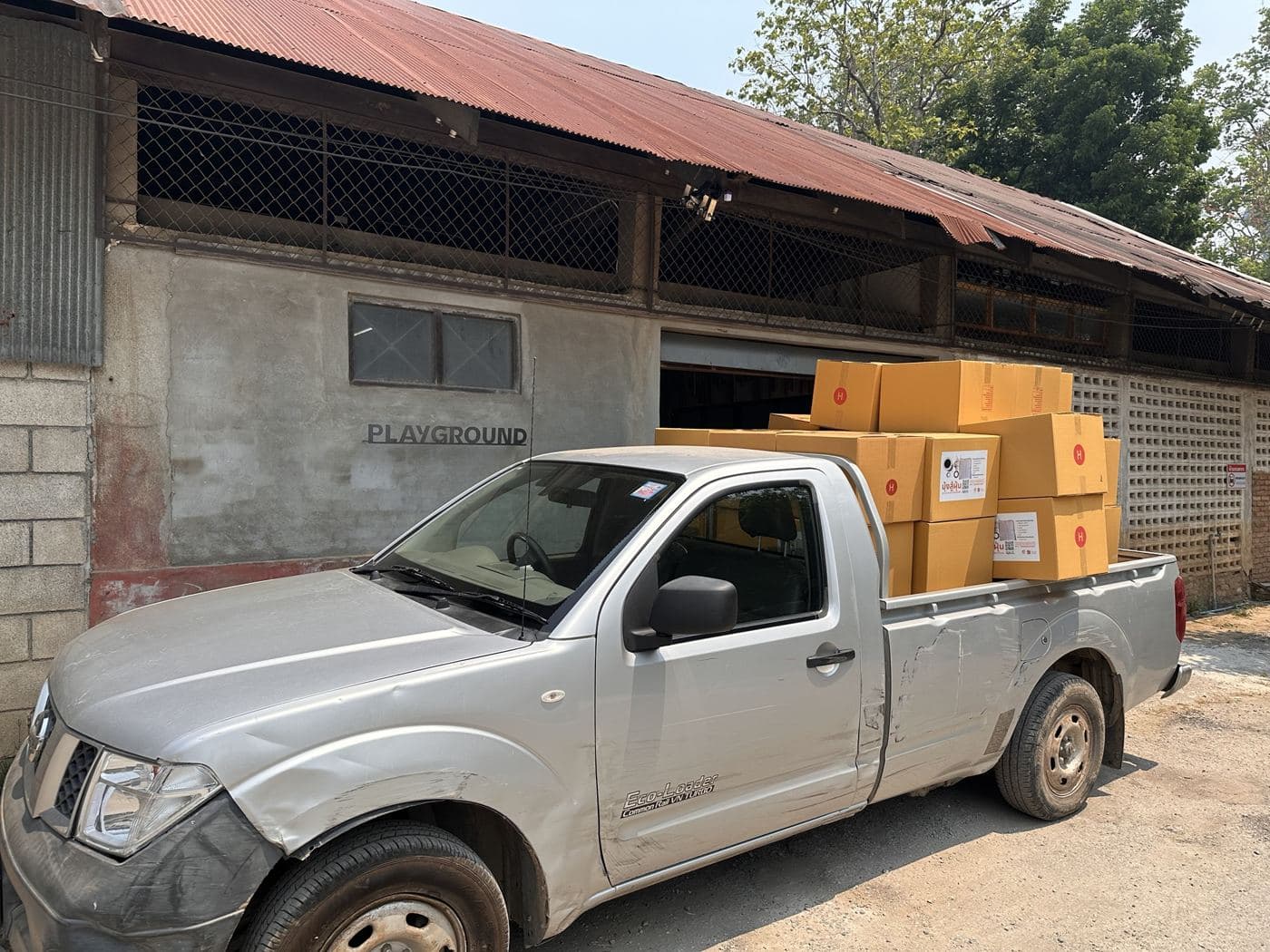
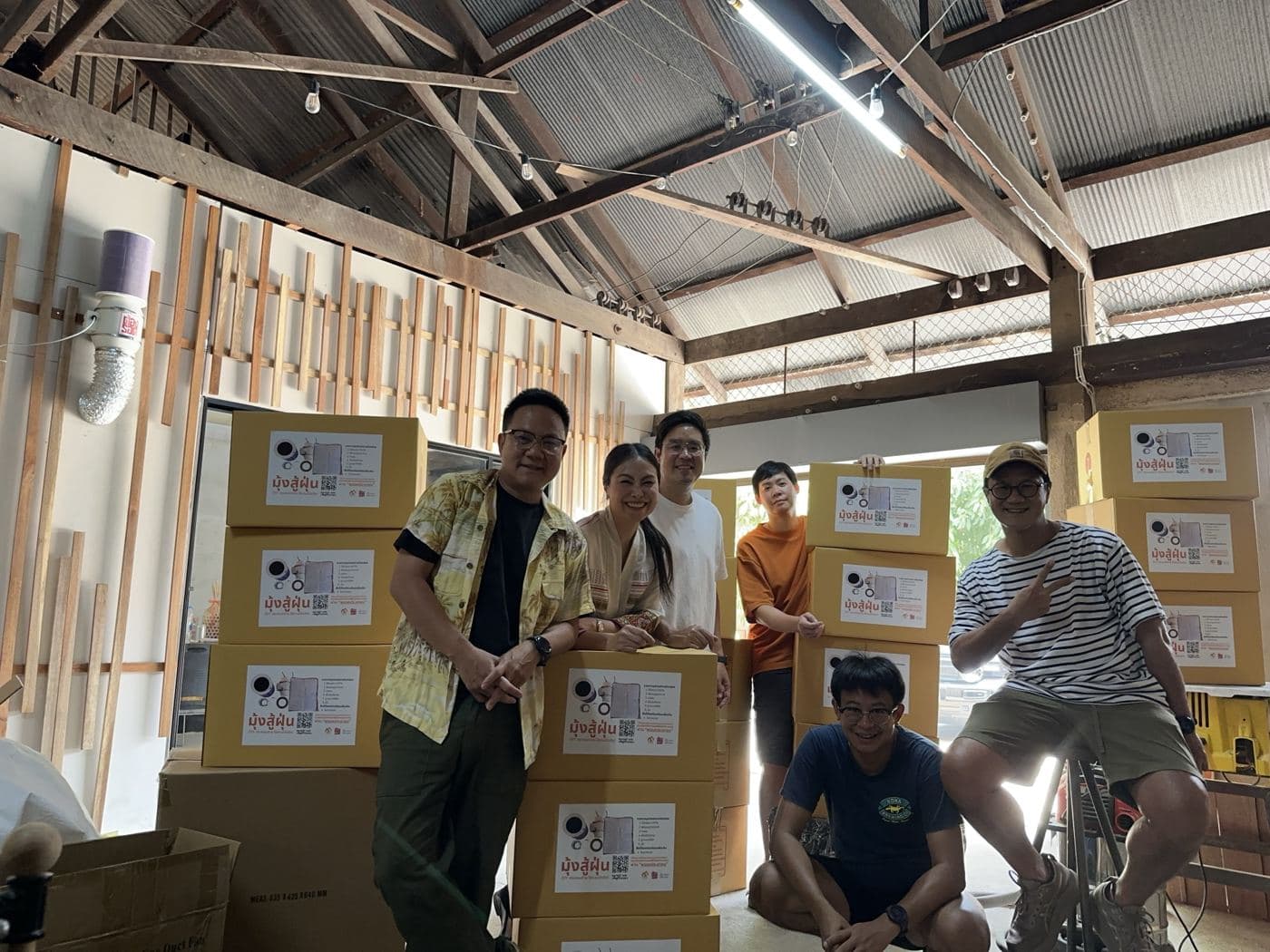
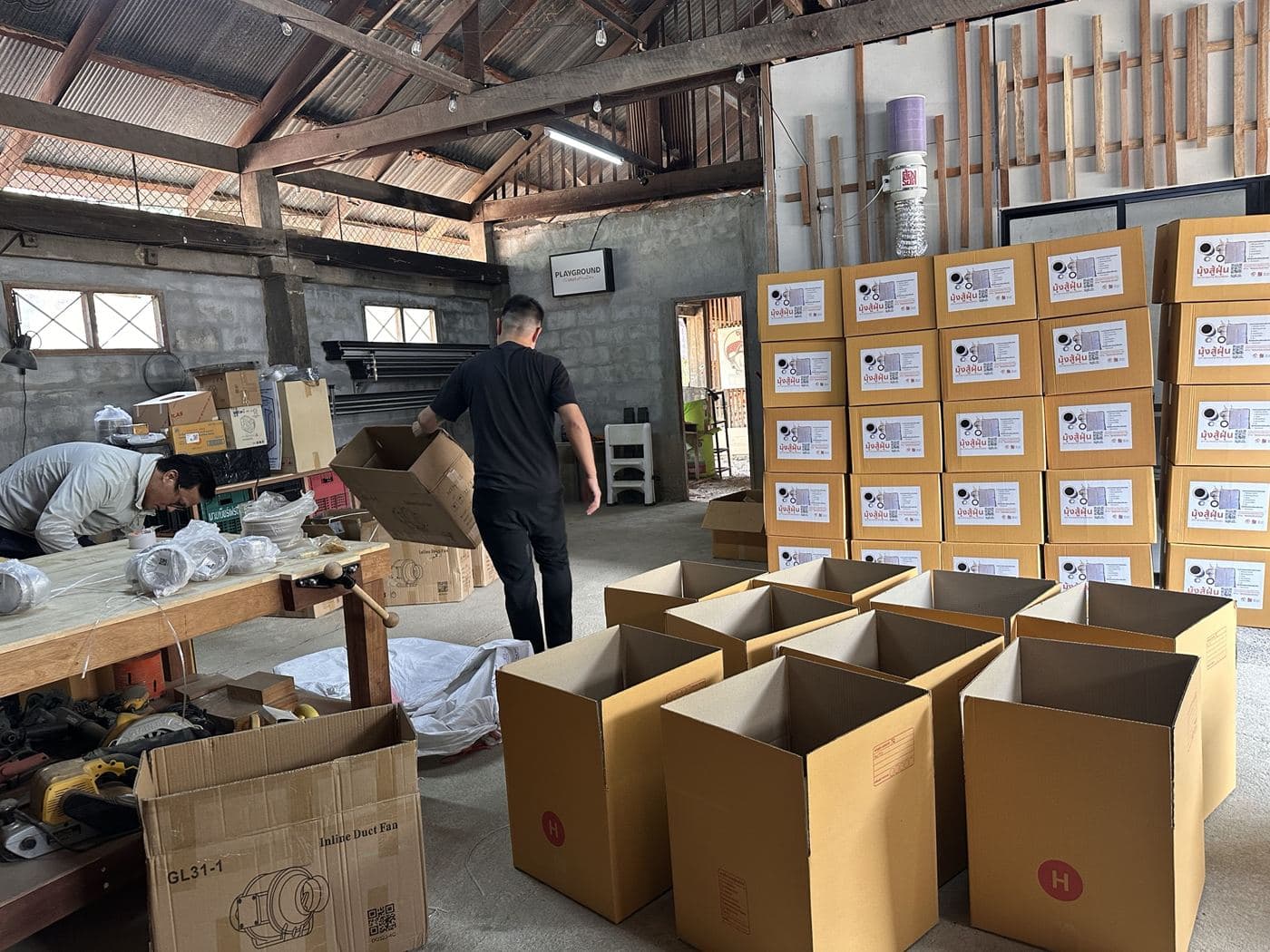
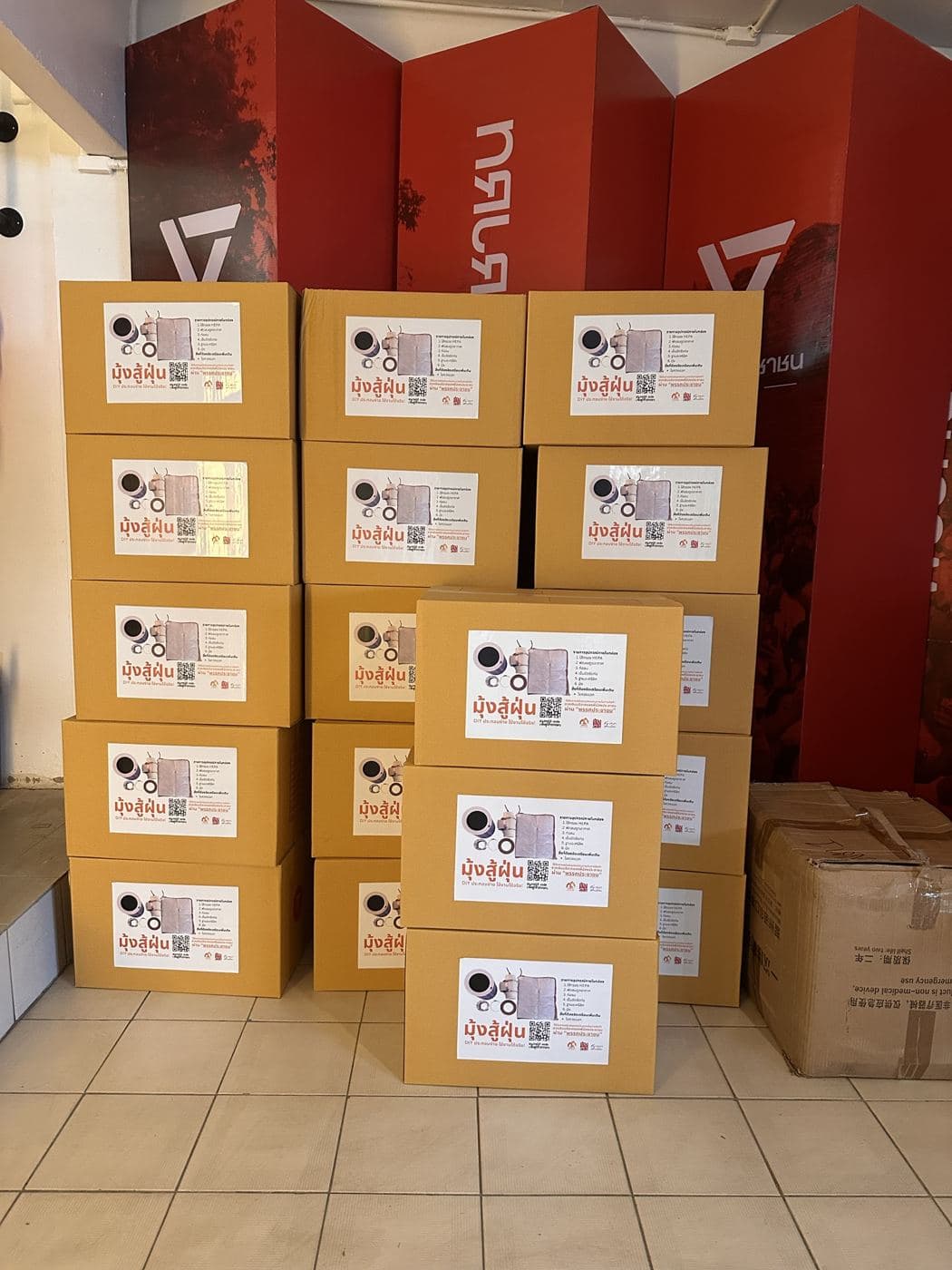
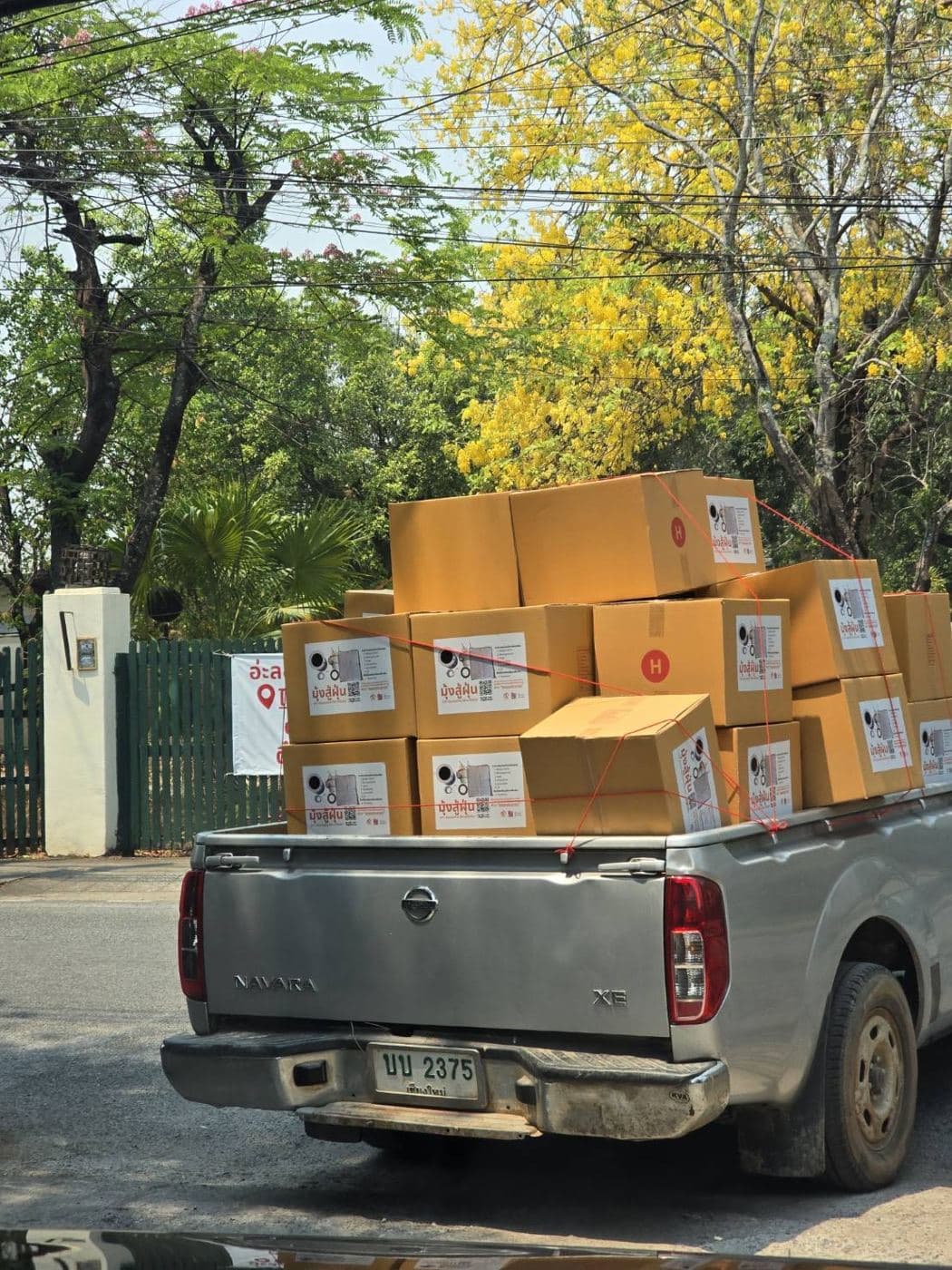
Last dust season we packed it into a DIY box set. One box has it all: filter, fan, duct, straps, acrylic base and the net. Open the box and build it yourself by following the video. Volunteers packed them at Playground, then we sent them to the People's Party to hand out through party representatives, like MPs across northern Thailand. 100 sets in all.
Delivered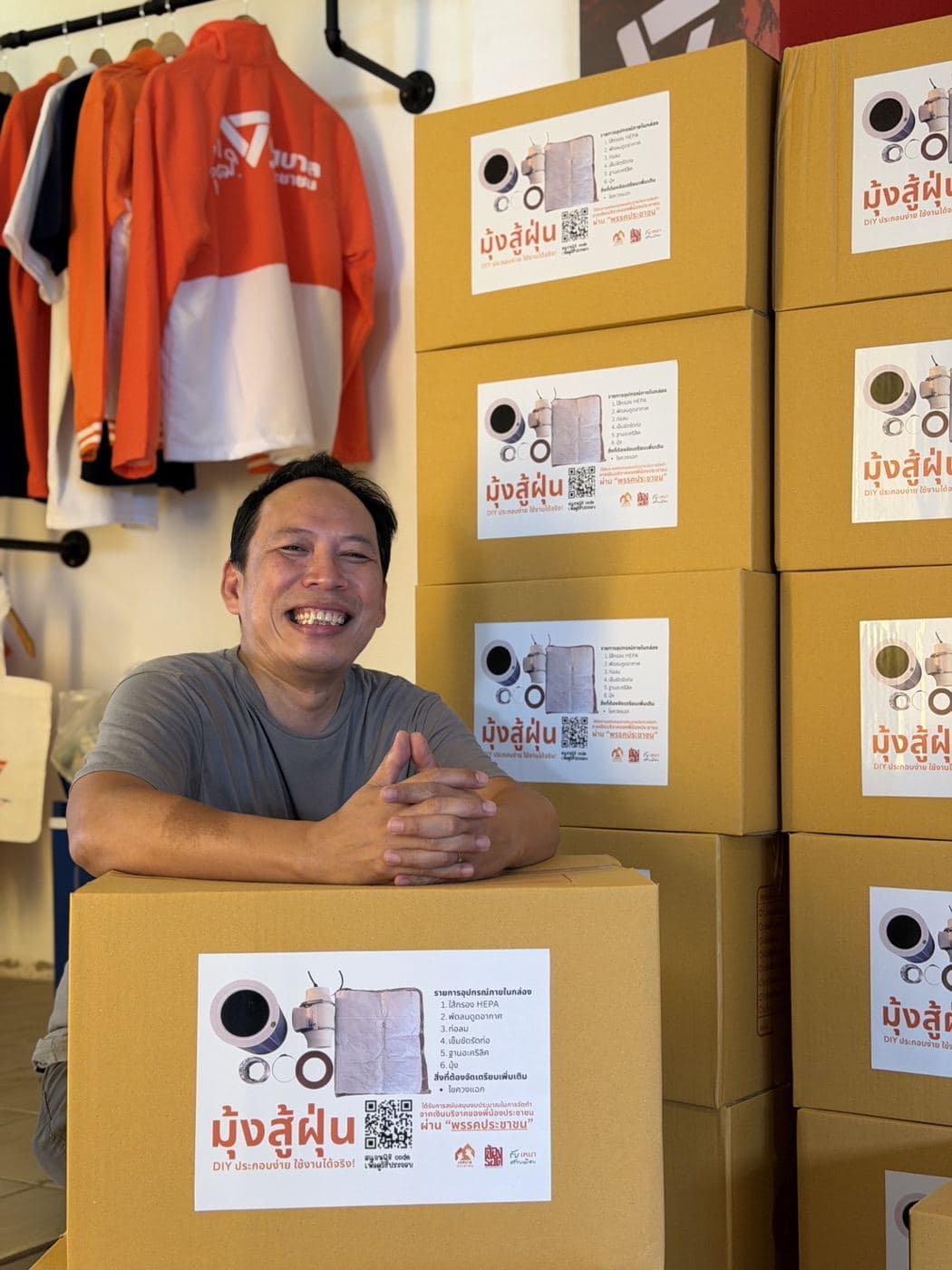
TR box (short for Tong Rod, hahaha) Next level: a clean air room controller we designed and 3D printed ourselves
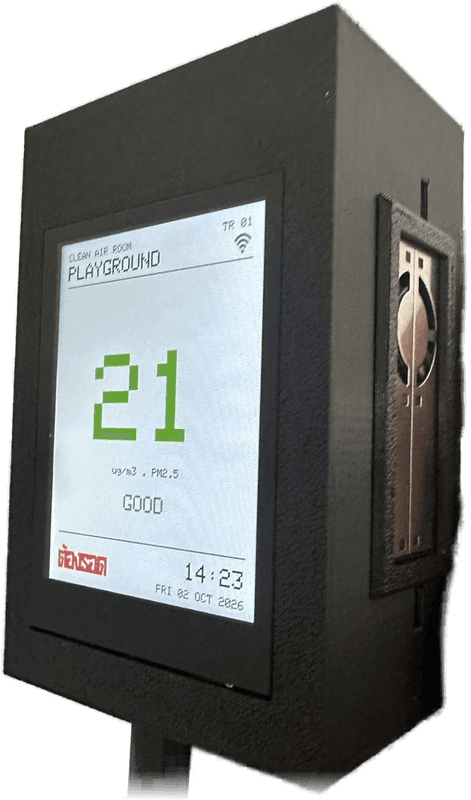
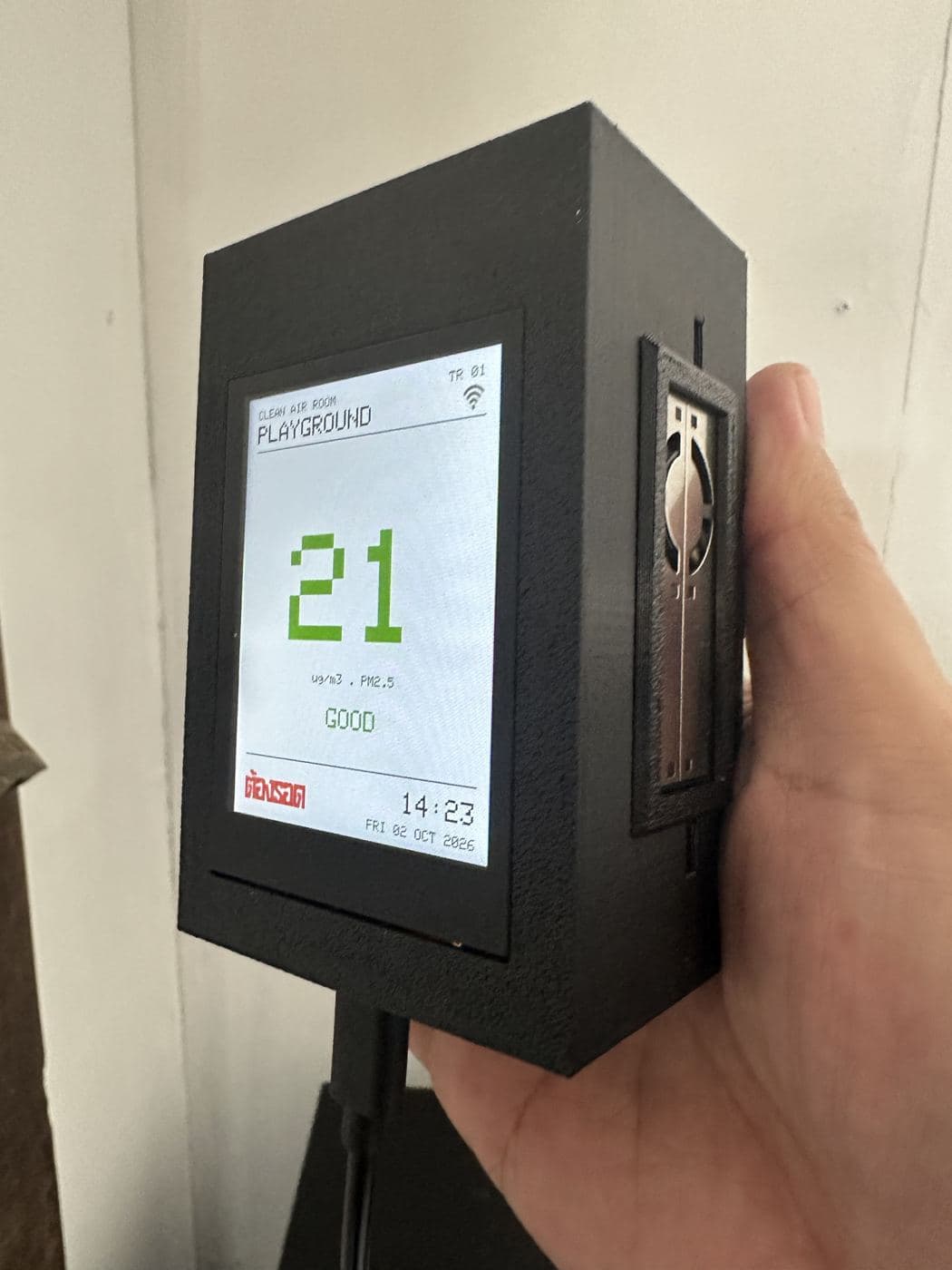
However good your clean air room is, you need to know the numbers inside. The TR box is a little box we programmed and printed ourselves, with a PM2.5 sensor for the room. It's a controller for your air purifier, installed in the clean air room. Set it to switch on when the air gets bad and off once the PM drops to a level you're happy with. Perfect if you're too lazy to keep checking when to turn the purifier on. Just set it: over 60, the fan kicks on; under 10, it switches off (or whatever numbers you like). Now you're in a room where the dust never gets to harmful levels, all year round. That's it. Simple tech that works for Chiang Mai.
One kit comes with the TR box, an adapter and a fan switch, all in one bag, ready to ship.
In real-world testing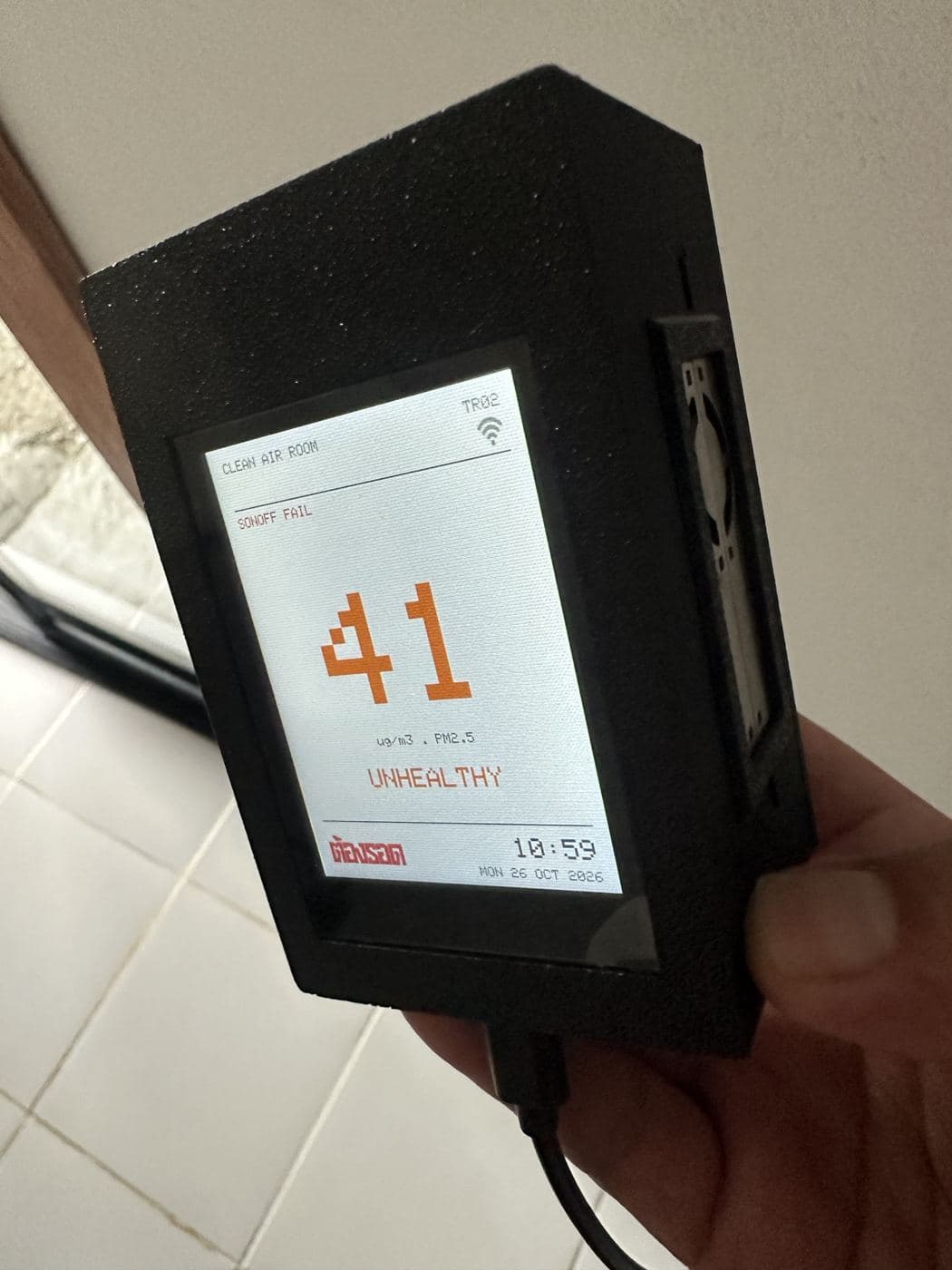
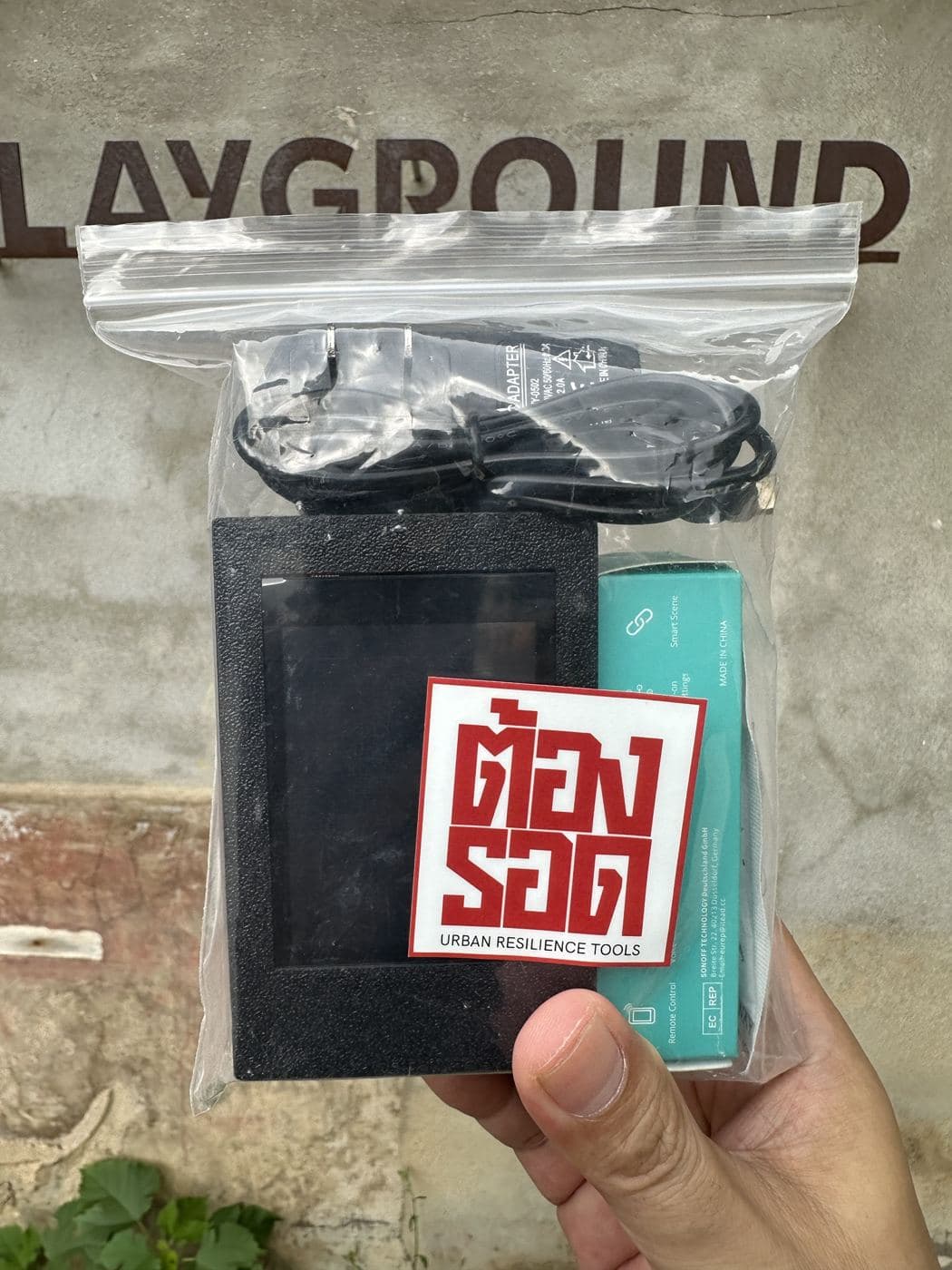
DIY flood barrier Being tested
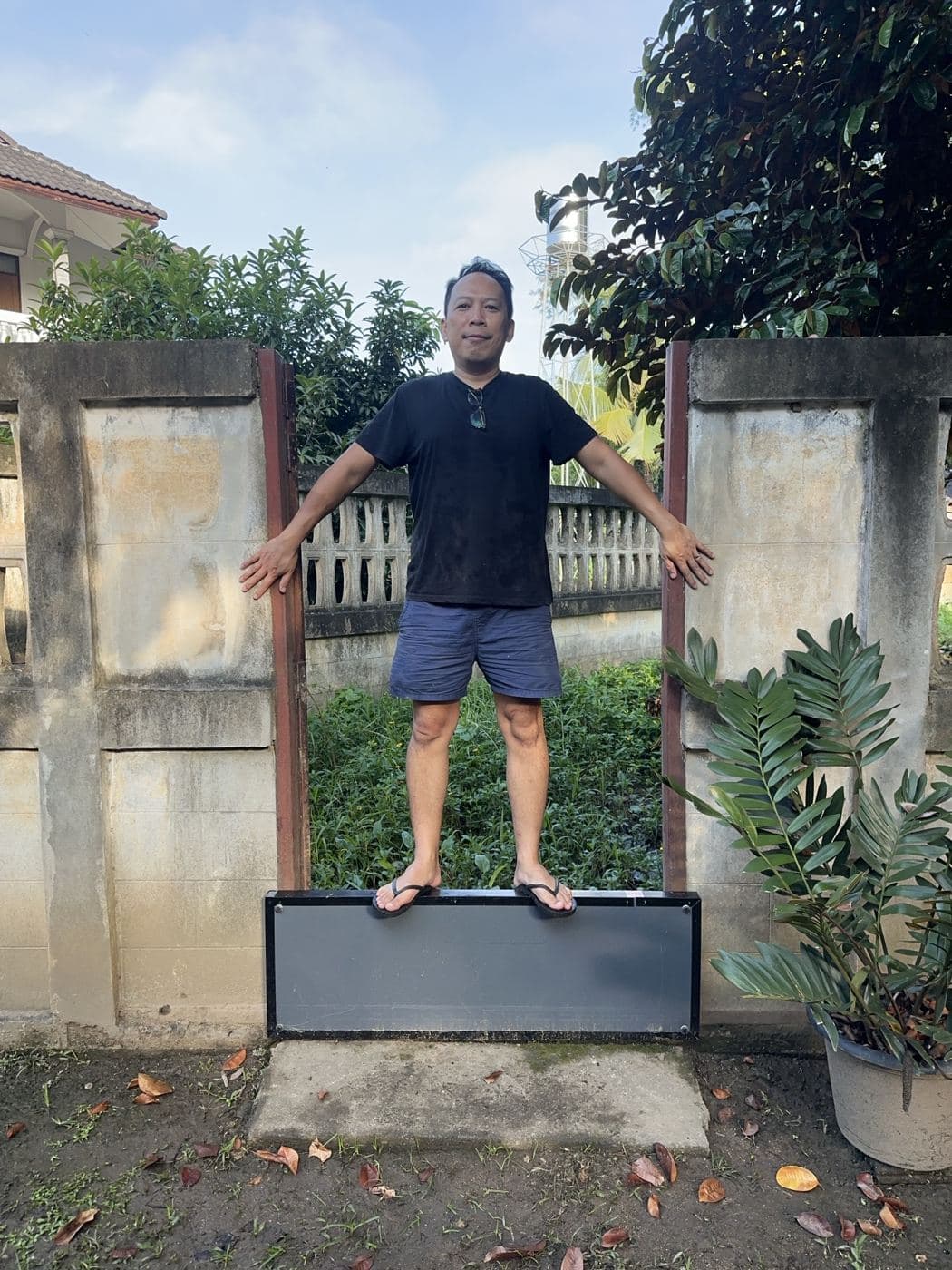
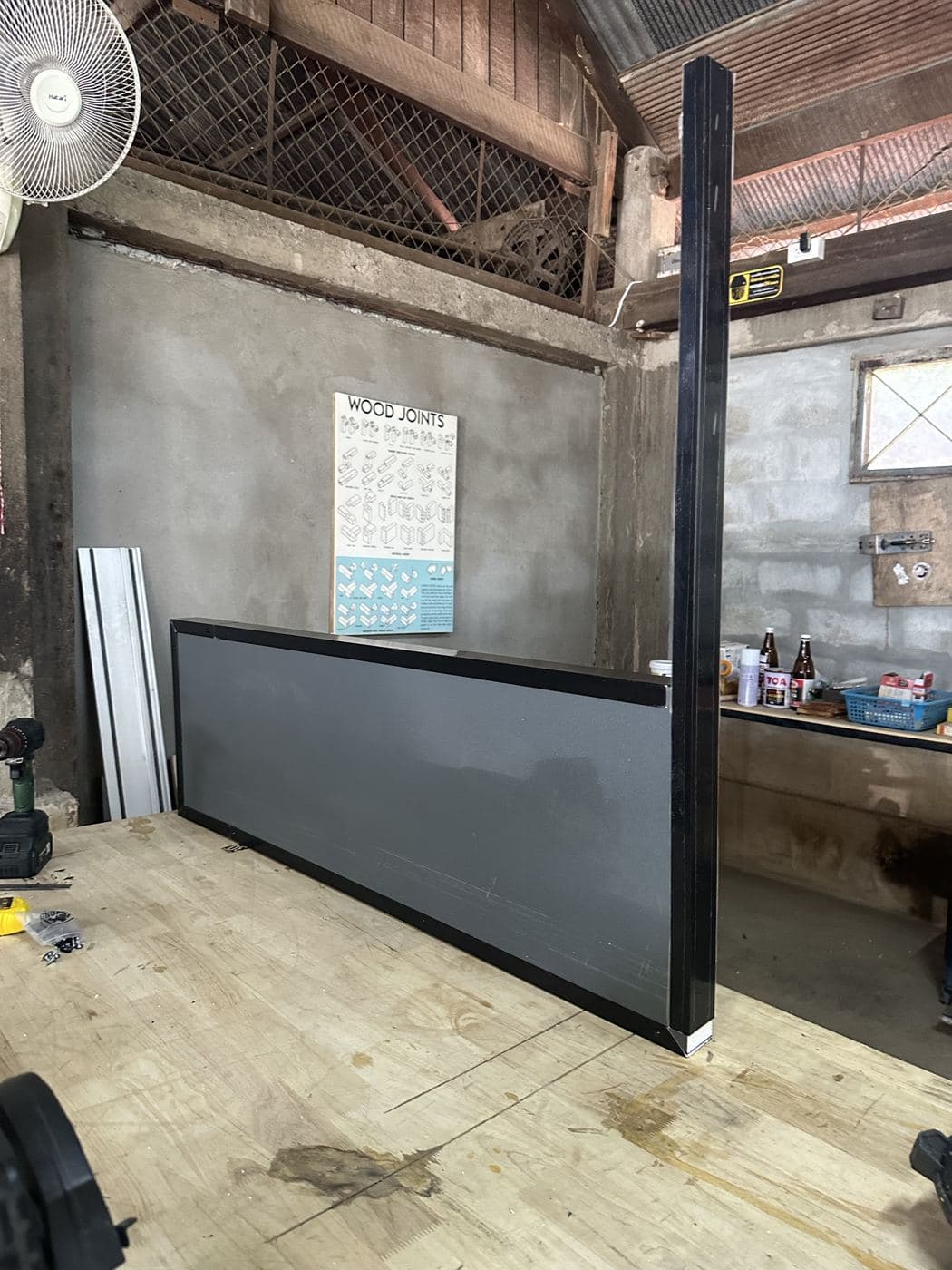
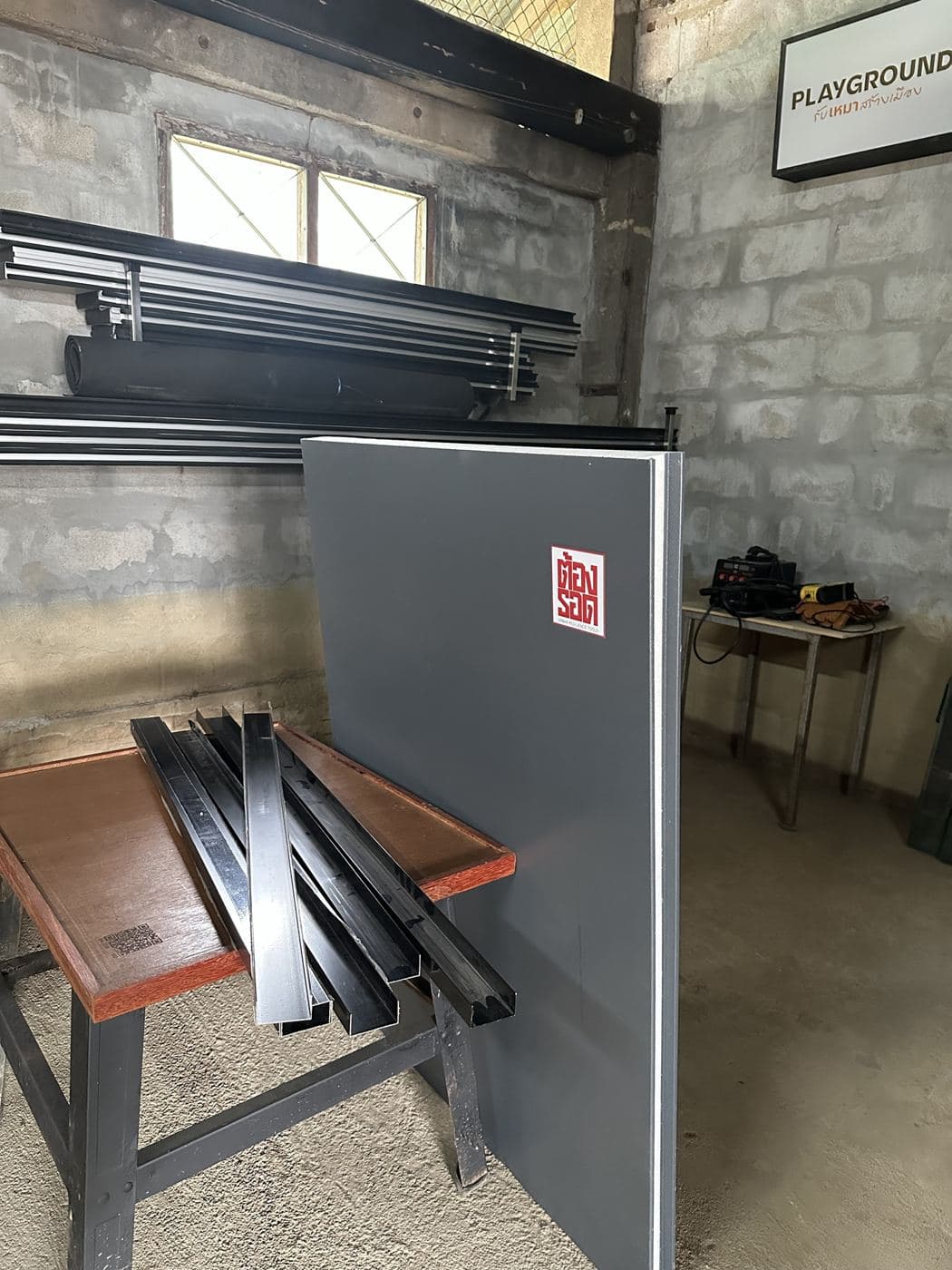
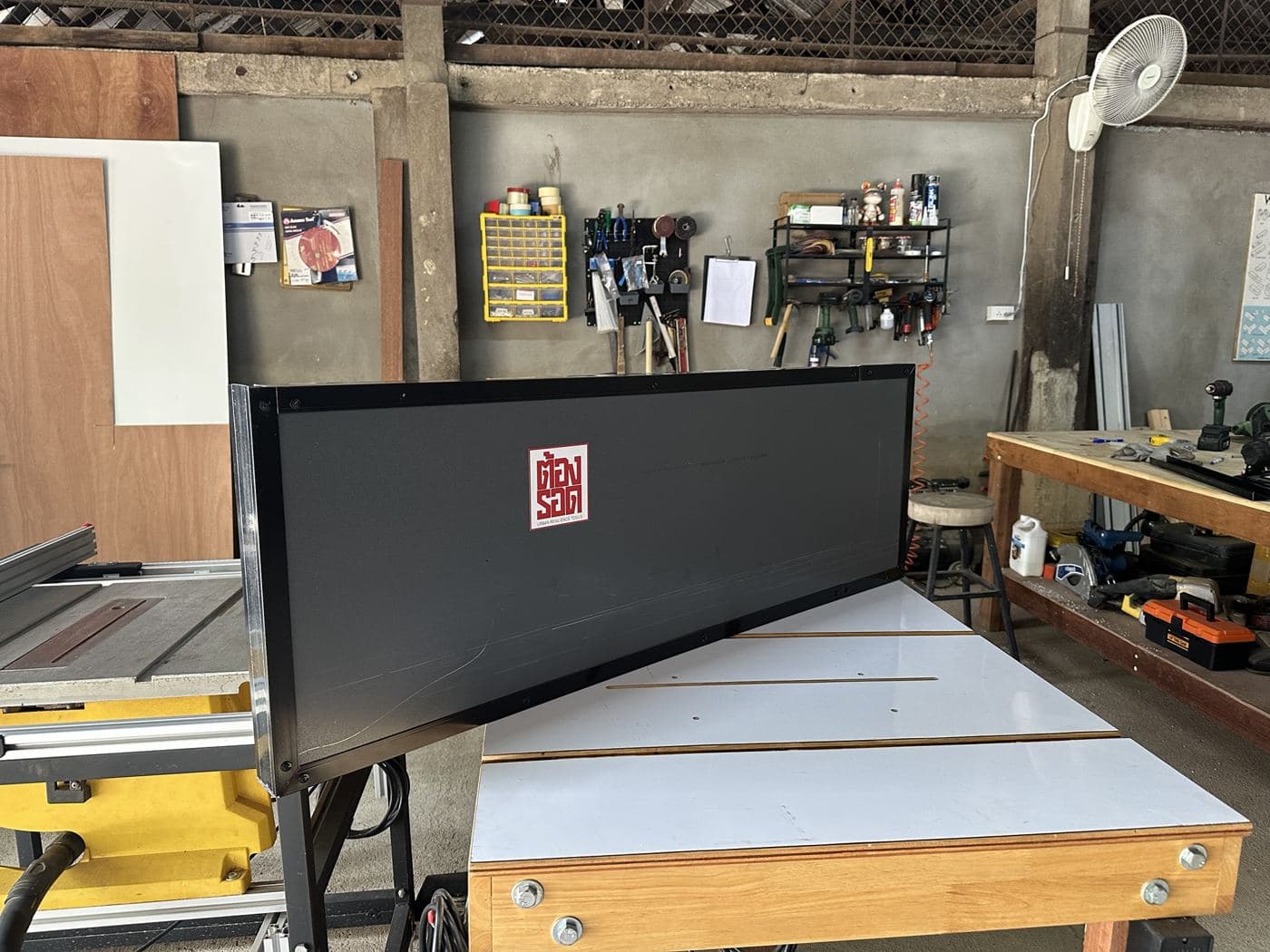
Last rainy season my own house flooded. Sandbags are heavy, they leak and there's nowhere to keep them. So I tried cutting ISOWALL panels to size and fixing them to my gate posts. They go on and off with M10 bolts in the four corners, drilled into the steel gate frame and held with rivet nuts. Water coming? Put it on. Water gone? Take it off and store it. One person can lift it, no sweat.
It's now installed for testing on the front gate of a real house. We're waiting for the next rain to prove whether water seeps in where it meets the ground, and the plan is to seal that with clear acrylic anyway. We're ready to start the next phase: scaling up to install it around Chiang Mai wherever people ask for it. It might cost a little for materials, or maybe some kind-hearted supporters will chip in 🥺
Testing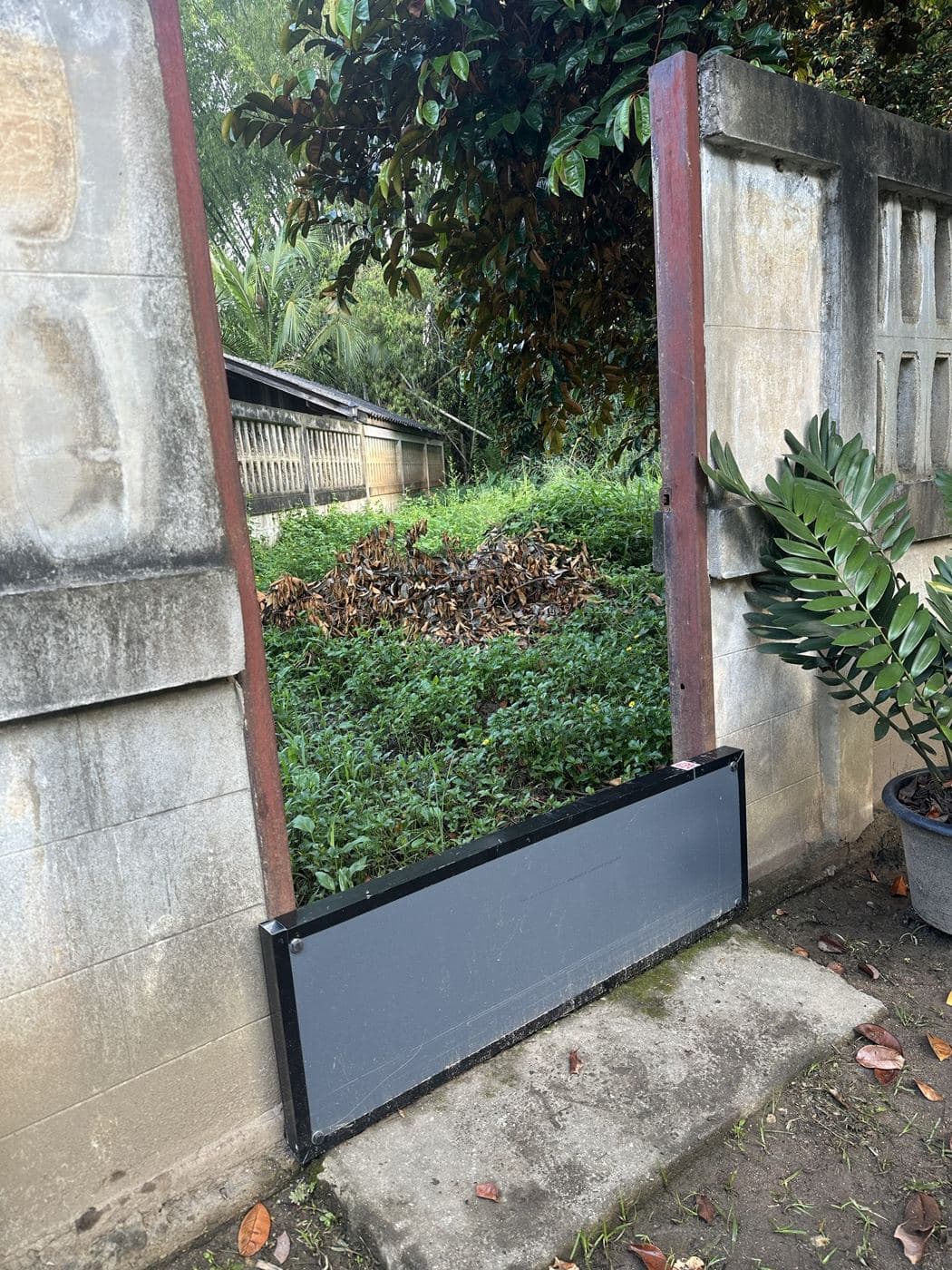

Project "Ror Ra-bye" waiting for the water to drain
Wat Ket and San Pa Khoi communities · October 2025
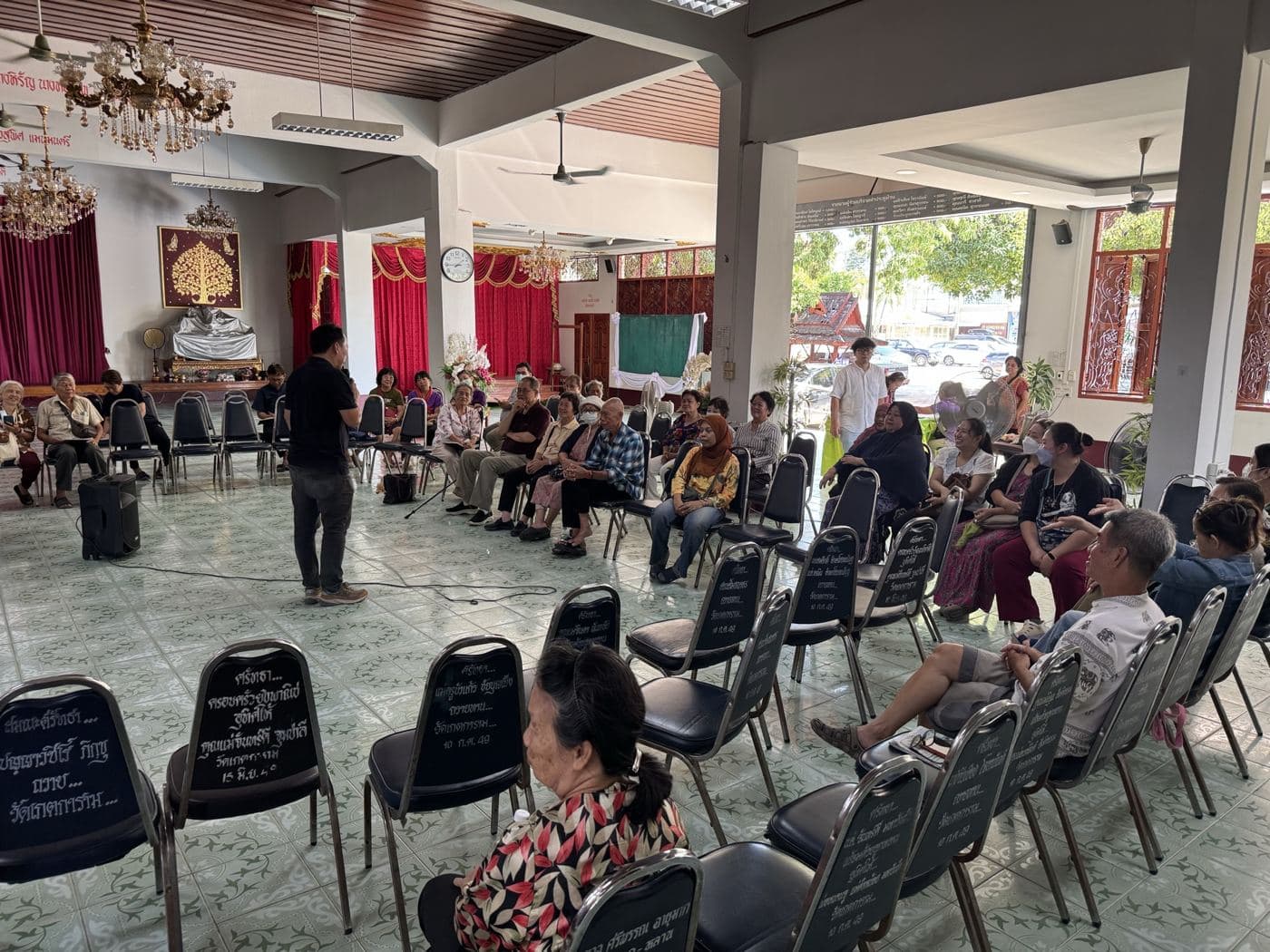
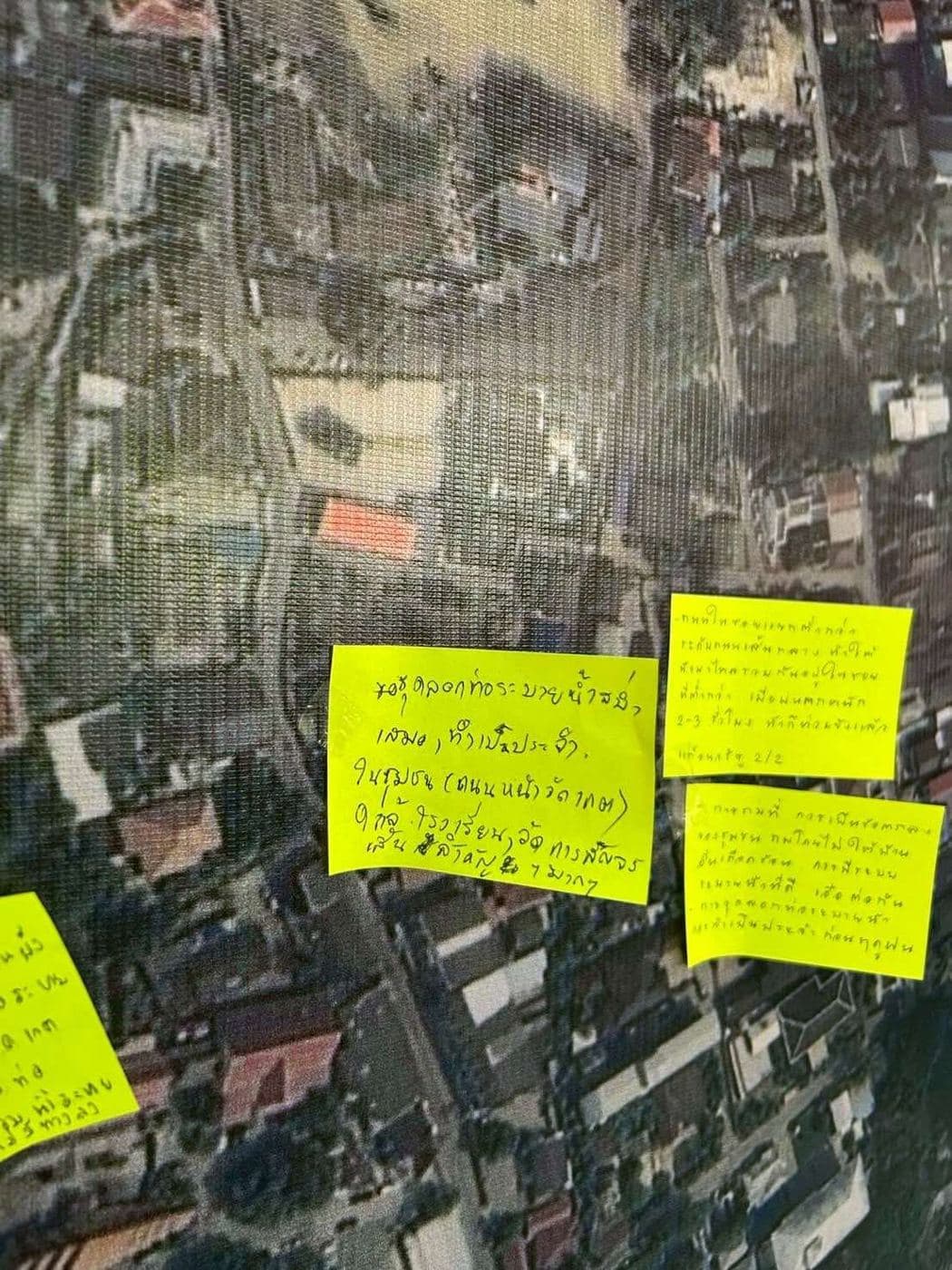
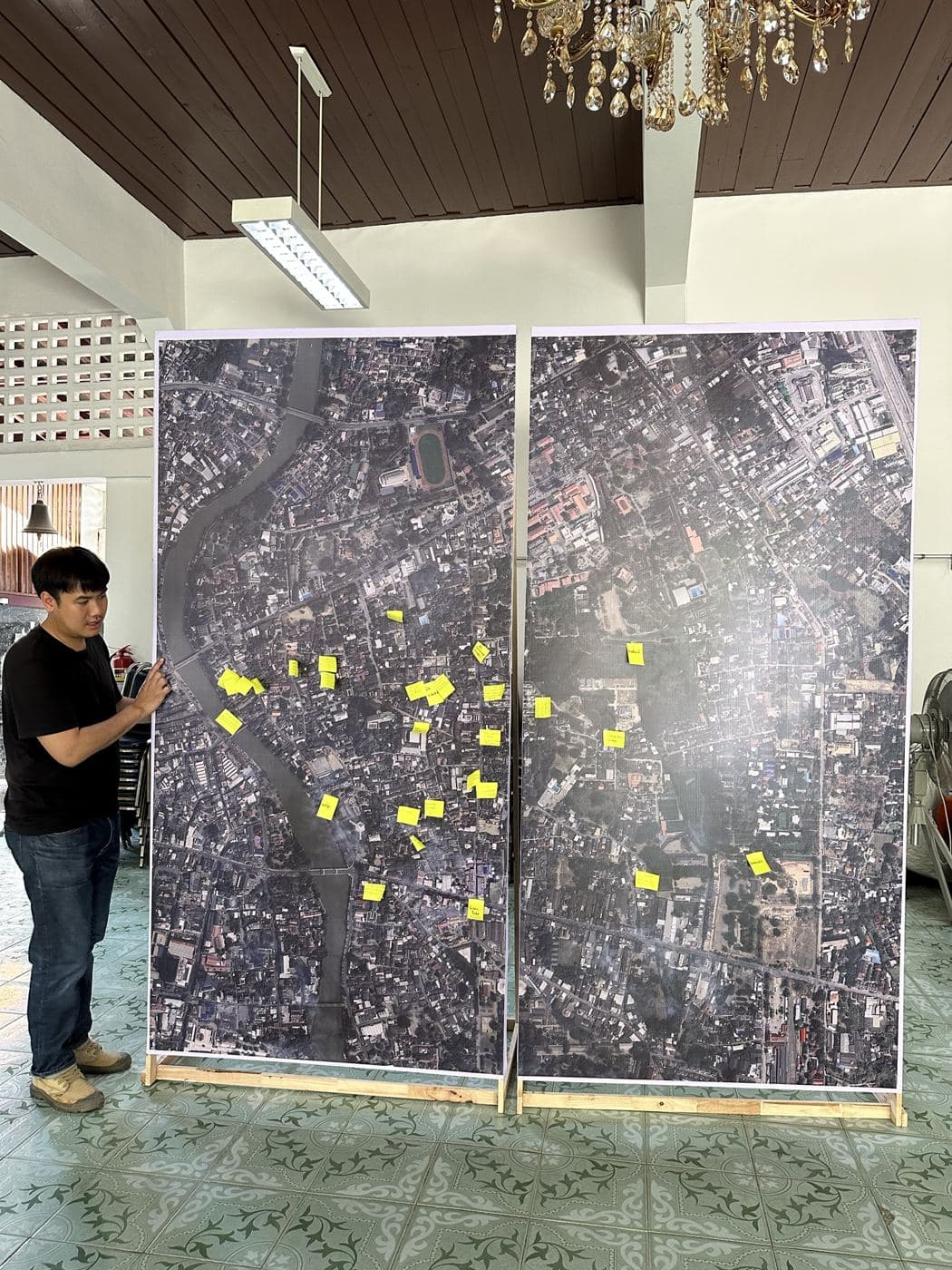
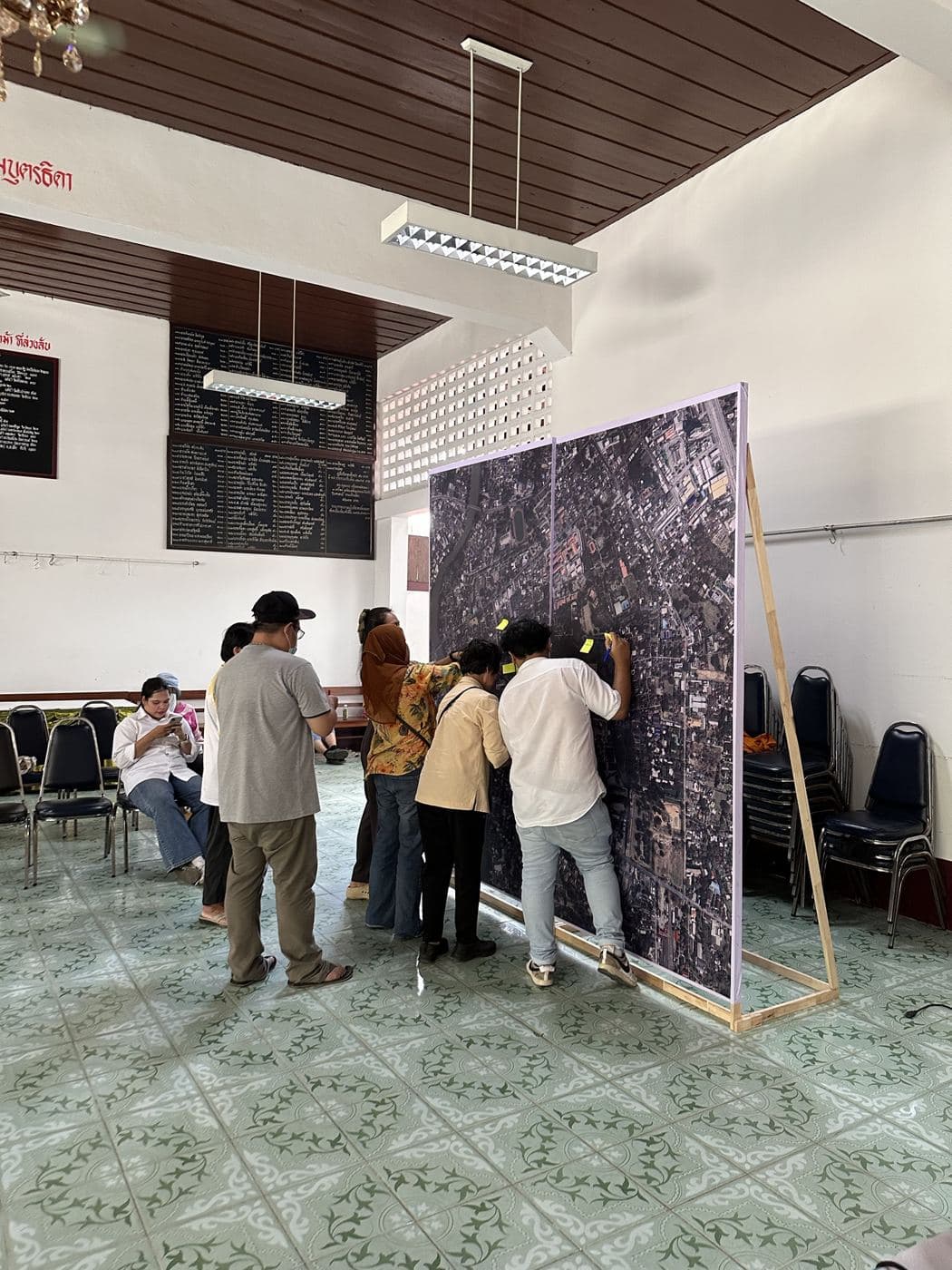
Standing water doesn't get fixed by just sitting in an office looking at a map. The people who actually know which drain is blocked and which soi floods first are the ones who live there every day. So "Ror Ra-bye" started by going to listen.
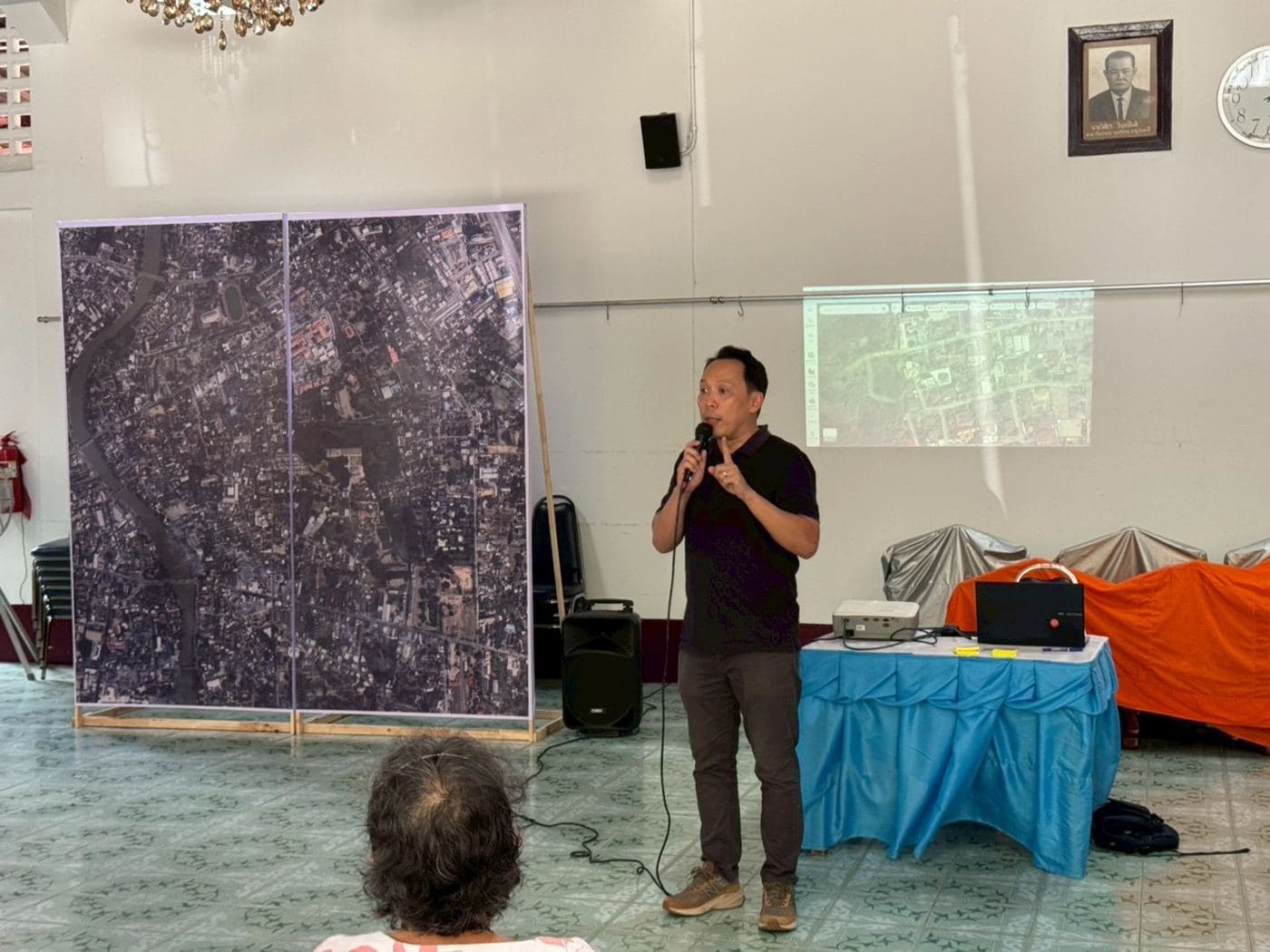
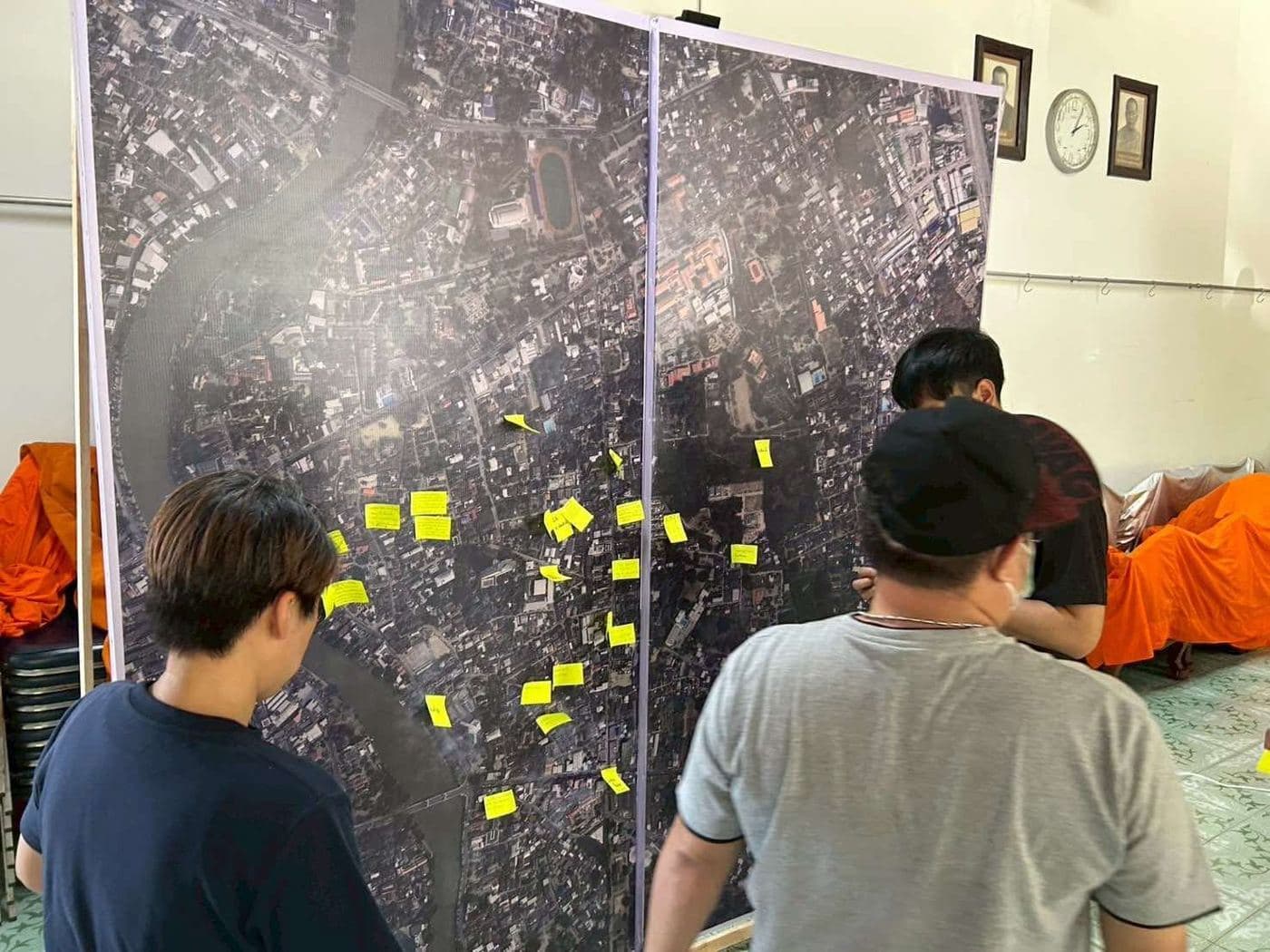
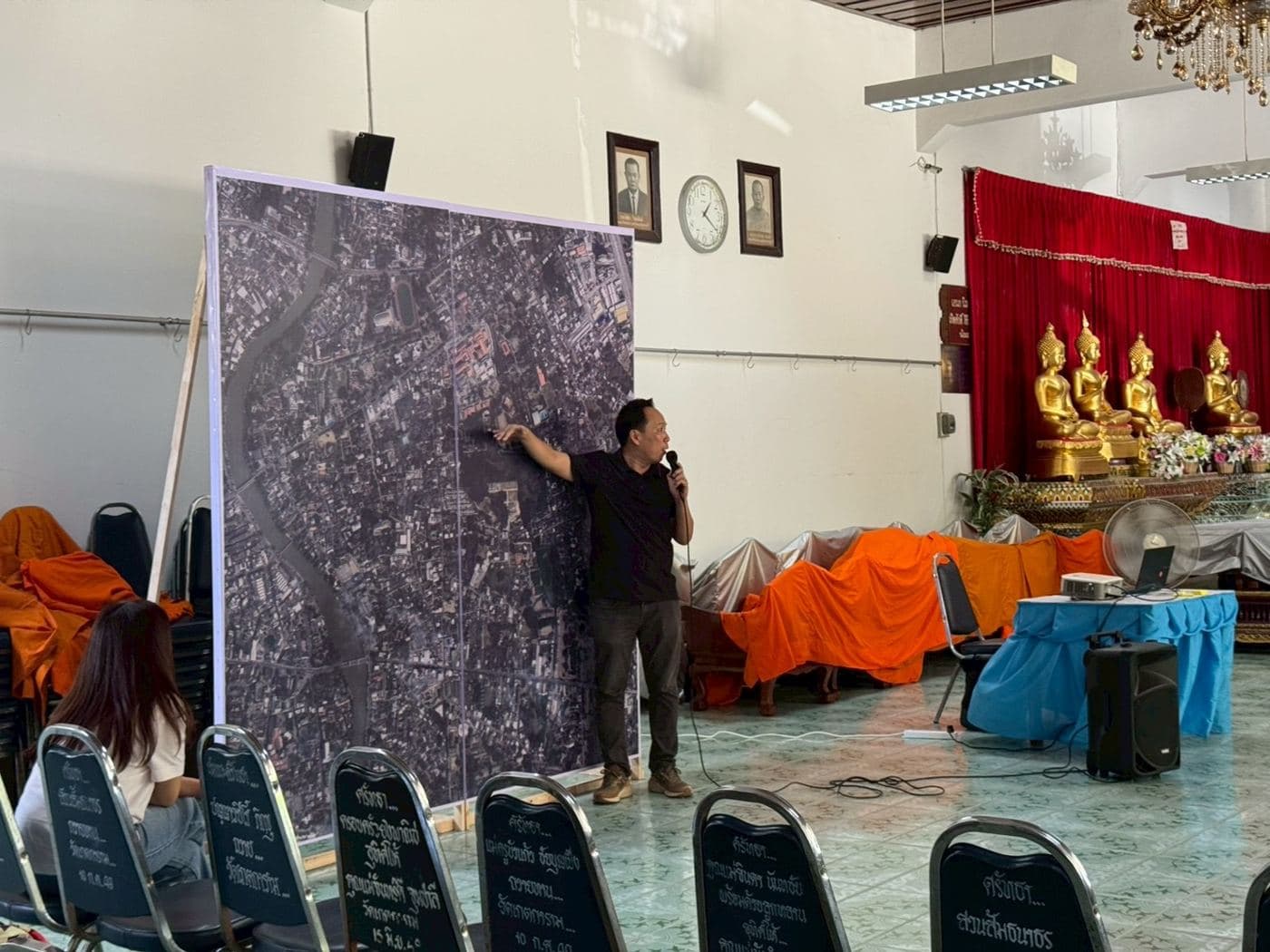
We blew up a satellite photo of the neighborhood to life size and stood it in the middle of the Wat Ket Karam hall. More than 50 locals came up and stuck post-its wherever their homes have problems. In one day we had a map of local trouble spots that no agency has, and no AI of any brand could work out. On top of that, we got a list of people who want to be "Ror Ra-bye volunteers" on their own soi.
30 volunteers from the community get trained as water scouts. They walk in pairs, chat door to door, find out which drains are blocked and which canals are shallow, then report to a shared LINE group the moment it rains. What locals report becomes a daily community flood map that the municipality can check to see where to dredge first.
Next, locals, mechanics and inventors design low-cost water level alarms together and install them at 8 to 10 risky spots. Water hits the line, a light comes on and an alert goes to the community LINE group. People know an hour before the water gets in, with time to move their stuff.
And after 5 months, the community runs the system on its own, without waiting on anyone. A model you could take to any other community in the city.
But the project stopped after the first month.
The budget only covered one month, so everything else is still on paper.
The trouble-spot map people made together that day is still here. The volunteer list is still here. The thinking is still here too: let the community own the process. And what we learned that day is the starting point for every flood tool we're working on.
Your home has to survive too
Nothing on this page is for show. It's all meant to be used. If your home, your shop or your community wants to try it, or you'd like to help develop it or invest in the social enterprise, just message me.
Message me